
Car Maintenance Schedule: How Often, Really?
A realistic car maintenance schedule: how often to change oil, rotate tires, flush brake fluid, and replace coolant, plus how to actually keep track.
How often should you actually do common car maintenance?
The honest version of a car maintenance schedule fits on an index card: engine oil every 5,000 to 10,000 miles, tire rotation every 5,000 to 8,000, engine air filter somewhere between 15,000 and 30,000, brake fluid every two to three years, and coolant usually past the 50,000-mile mark. Tire pressure gets a check once a month, because it drifts whether you drive the car or not.
Everything else hangs off those anchors. The car maintenance intervals below are the widely accepted ranges for routine car maintenance, not gospel: your owner's manual wins every argument, and the second half of this post explains why. But if you've been guessing, these numbers beat the sticker a quick-lube shop slapped on your windshield three owners ago.
Engine oil and filter: every 5,000 to 10,000 miles
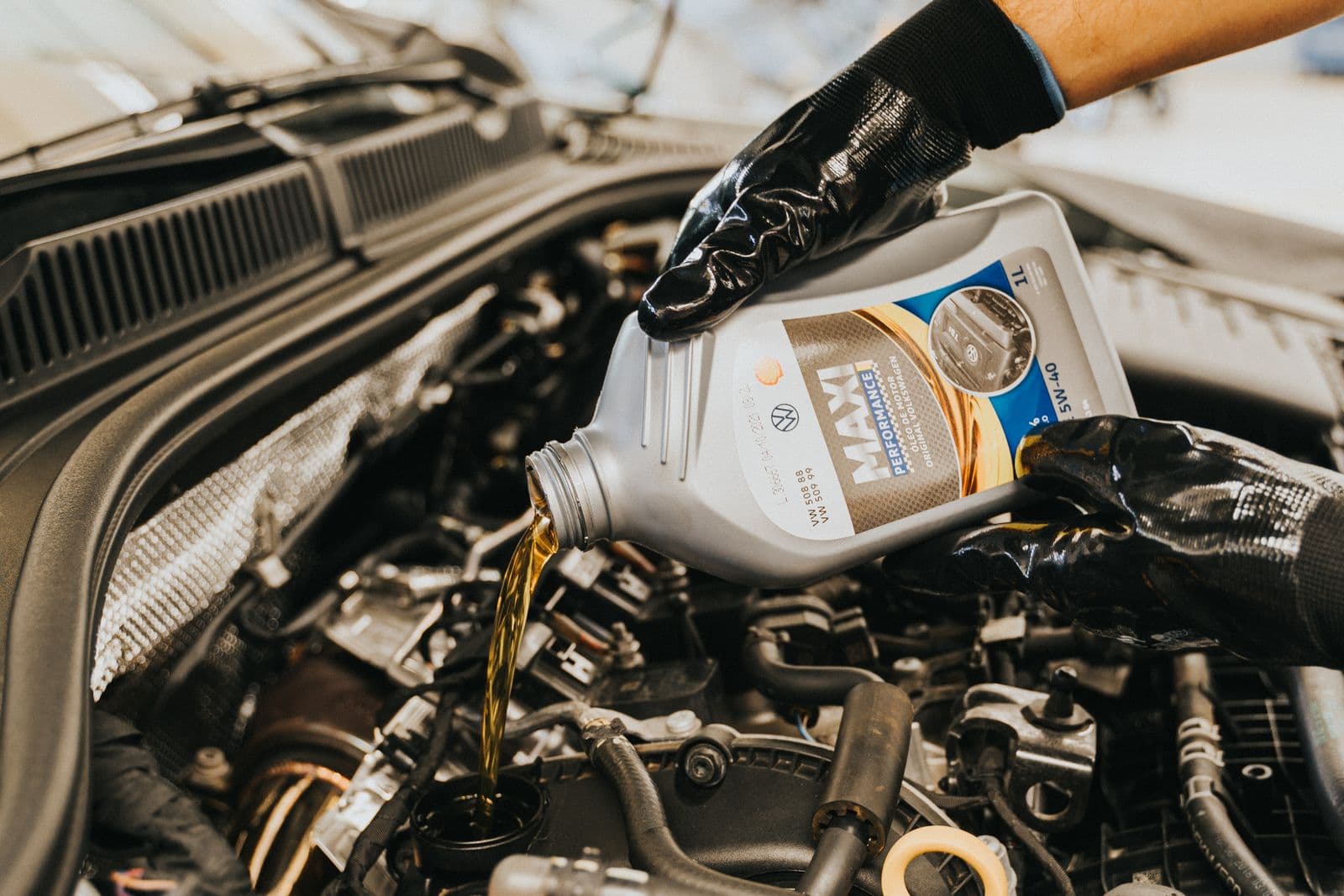
The 3,000-mile oil change is mostly a leftover from carbureted engines and conventional oil. Modern engines running full synthetic commonly go 7,500 to 10,000 miles between changes, and most manuals add “or twelve months, whichever comes first,” because oil degrades with time as well as miles. A garage-kept car that covers 4,000 miles a year still wants fresh oil annually.
The catch is the fine print. Short trips where the engine never fully warms up, towing, stop-and-go commuting, and dusty roads all count as “severe service” in your manual, and that schedule can cut the interval nearly in half. Replace the filter with every oil change. A filter costs a few dollars, and skipping it to save money is the automotive equivalent of showering with your socks on.
Tires: rotate every 5,000 to 8,000 miles, check pressure monthly
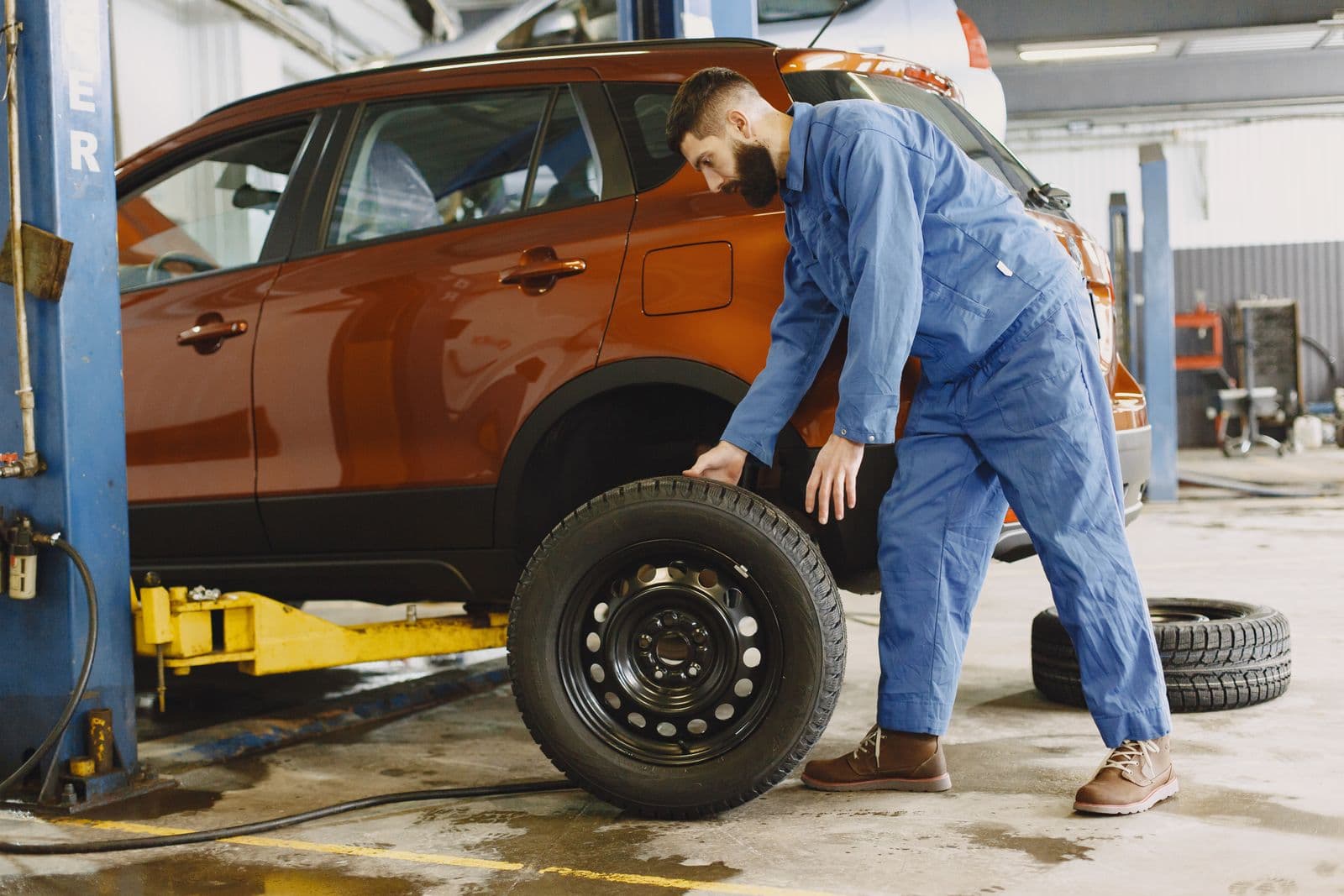
Rotate tires every 5,000 to 8,000 miles so all four wear at the same rate. The easiest way to actually do this is to pair it with your oil change, since the car is already in the air and the interval lines up almost perfectly. Front tires on a front-wheel-drive car wear much faster than the rears, and skipping rotations means buying two tires long before the other two are done.
Pressure is a monthly job, and before any road trip. Tires lose a little air every month on their own, and underinflation wears the shoulders, hurts fuel economy, and is a factor in blowouts, which is why NHTSA's tire safety guidance keeps hammering the point. While you're down there, glance at the tread wear bars. If the tread is flush with them, the tire is done.
Brakes: inspect pads at every rotation, flush fluid every two to three years
Brake pads have no fixed interval because driving style dominates everything else. A highway commuter might get 60,000 miles from a set of pads while a city driver grinds through them in 25,000. The practical rule: have the pads looked at every time the tires are off, which is exactly why pairing inspections with rotations works so well.
Brake fluid is the interval people skip because the car seems fine. The fluid absorbs moisture out of the air, and after a couple of years that water lowers its boiling point and corrodes the lines from the inside. That's why the two-to-three year flush applies even to cars that barely get driven. A soft or spongy pedal is the late warning, and you don't want to meet it on a mountain descent.
The fluids everyone forgets: coolant and transmission
Coolant on most modern cars is long-life: the first change often lands between 60,000 and 100,000 miles, with shorter intervals after that. The spec matters more than the interval here, because mixing incompatible coolant types can gel and clog the system. Check the manual for both the schedule and the exact fluid before anyone pours anything in.
Automatic transmission fluid is the controversial one. Plenty of manufacturers call it “lifetime” fluid, and plenty of transmission shops make a living off that claim. If you tow, haul, or drive in serious heat, most independent mechanics will point you at a 30,000-to-60,000-mile service regardless of what the marketing says. At minimum, find out what your manual specifies for severe service and decide which category your driving honestly falls into.
The small stuff: filters, wipers, and the battery
Engine air filters last 15,000 to 30,000 miles, less on dirt roads. Hold it up to a light: if you can't see light through it, replace it. Cabin air filters run on a similar interval, and a musty smell from the vents usually means you're overdue. Wiper blades are a six-to-twelve month item no matter what you spend on them, because sun kills the rubber faster than wiping does.
Batteries don't really have a service interval, they have a lifespan. Most last four to five years, and they rarely announce the end politely. Starting around year three, have the battery tested whenever the car is in for other work. It takes a few minutes and it's the difference between replacing it on your schedule and replacing it in a grocery store parking lot in January.
Why your owner's manual beats any generic car maintenance schedule
Every number above is a range because every generic car maintenance checklist is an average across millions of cars that aren't yours. Your manual publishes the actual vehicle maintenance schedule for your exact engine and transmission, and it almost always includes two versions: normal service and severe service. Read the severe list carefully. Short trips, extreme temperatures, and stop-and-go traffic put a large share of ordinary commuters in the severe column without them realizing it.
If the manual is long gone, most manufacturers post them free online, and fueleconomy.gov's maintenance page is a decent sanity check on which items are schedule-critical versus nice to have. When a shop recommends something your manual never mentions, that's not automatically a scam, but it is automatically a question.
Knowing the intervals is easy. Remembering them is the job.
Nobody forgets that oil changes exist. People forget whether the last one was in March or October, and at what mileage, which turns every interval above into a guess. That's the actual failure mode of preventive maintenance: not ignorance, just missing records. A dated log with odometer readings, like the one described in our guide to what belongs in a car maintenance log, is what turns a schedule from good intentions into something you can check in thirty seconds.
Wheelscribe's entry form records the date, mileage, cost, and parts for every job, so “when was the brake fluid done” is a search instead of an archaeology project. The free plan covers one car with unlimited entries, which is exactly enough to stop guessing.
Frequently asked questions
How often should I get my car serviced?
Use the oil change as the heartbeat: every 5,000 to 10,000 miles or once a year for most modern cars, with tire rotation and a general inspection done at the same visit. Bigger items like brake fluid, coolant, and transmission service land at the mileage milestones in your owner's manual.
Is the 3,000-mile oil change still necessary?
For most modern cars, no. Full synthetic oil routinely runs 7,500 to 10,000 miles between changes. The exception is severe service: frequent short trips, towing, or dusty conditions can justify shorter intervals, and your manual spells out where that line sits for your engine.
How often should tires be rotated?
Every 5,000 to 8,000 miles for most vehicles. The simplest habit is rotating at every oil change, since the intervals overlap and the car is already up on a lift. Regular rotation evens out wear so all four tires reach the end of their life together.
What maintenance does a car need at 30,000, 60,000, and 90,000 miles?
Around 30,000 miles expect air filters and an inspection of brakes and suspension. The 60,000-mile visit often adds brake fluid, coolant, and sometimes transmission fluid. By 90,000 to 100,000 miles, spark plugs and any scheduled timing components come due. Your manual's schedule is the authoritative list for your specific car.
What happens if I skip scheduled maintenance?
Nothing, at first, which is exactly the trap. Worn fluids and filters cause damage that compounds quietly for months before a symptom shows up, and the eventual repair usually costs far more than the service did. Missing records can also complicate warranty claims and hurt resale value.
Start logging your car's history
One car, unlimited entries, free forever. See pricing for what Pro adds.
Create free account