
E-Bike Maintenance Guide: Battery, Brakes, and Chain Care
An e-bike maintenance guide covering battery charging and storage, brake pad wear, chain lube, and the bolts that loosen under motor torque.
What e-bike maintenance adds on top of a regular bike
E-bike maintenance covers everything a regular bicycle needs, chain, brakes, tires, plus a battery and motor system with their own rules. Skip the battery-specific care and you shorten its life fast; skip the torque checks on a motor-equipped bike and bolts back out sooner than they would on a pedal-only bike, since the motor adds forces the frame and fasteners weren't originally sized for.
None of it is complicated, it just needs its own checklist instead of borrowing your old bike's routine wholesale.
Charge the battery the right way
Use only the charger that came with your e-bike. A mismatched or generic charger is one of the most common causes of lithium battery fires in micromobility devices, according to the Consumer Product Safety Commission's warning on universal chargers. Charge on a hard, dry surface with room for airflow, plug directly into a wall outlet rather than a power strip, and stay nearby, don't charge overnight while you sleep or leave the house.
Unplug once the battery is full. Leaving a lithium battery on the charger for hours after it hits 100 percent adds heat stress that shortens its usable life, even if the charger itself cuts off current. The CPSC's micromobility charging safety guidance covers this and a handful of other habits worth building.
Store the battery at partial charge, not full or empty
If the bike is sitting for more than a couple of weeks, don't store the battery fully charged or fully dead. Most manufacturers recommend somewhere around 30 to 60 percent, at room temperature, out of direct sun. A full charge held for weeks accelerates capacity loss, and a battery left to drain to zero can drop into a state some packs can't recover from.
Check on it monthly if it's in long-term storage and top it off if it has drifted below the recommended range.
Watch hydraulic disc brakes closer than on a regular bike
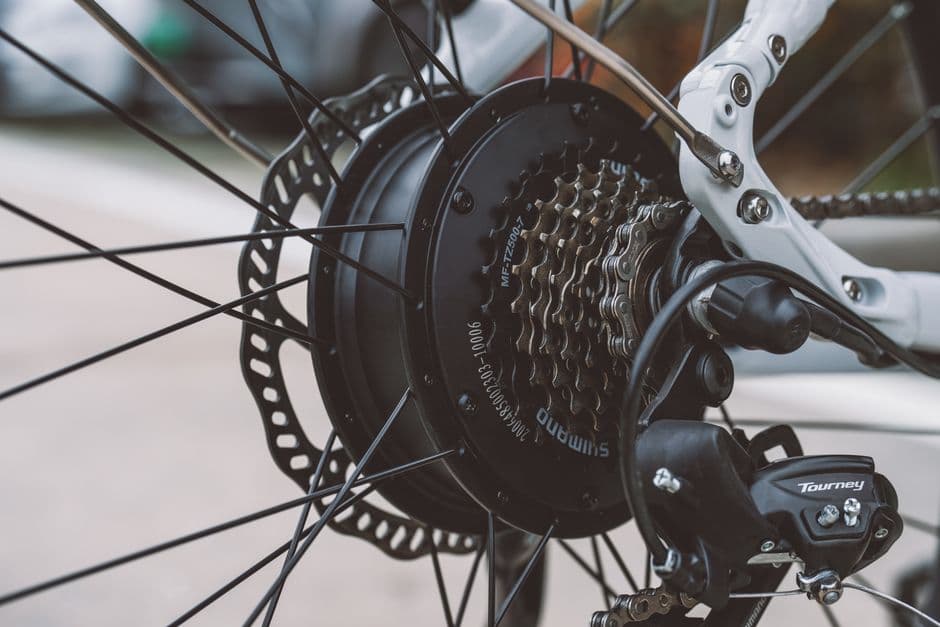
The extra weight and speed of an e-bike load hydraulic disc brakes harder than a standard bicycle does, so pads wear faster than the mileage alone would suggest. Check pad thickness every month or two of regular riding, and bleed the lines if the lever starts feeling spongy, that's air in the system, not something that fixes itself.
Rotors wear too. Replace one that's visibly thinner at the edge than the rest of the disc, or that has developed a lip you can feel with a fingernail.
Keep the chain and drivetrain ahead of motor torque
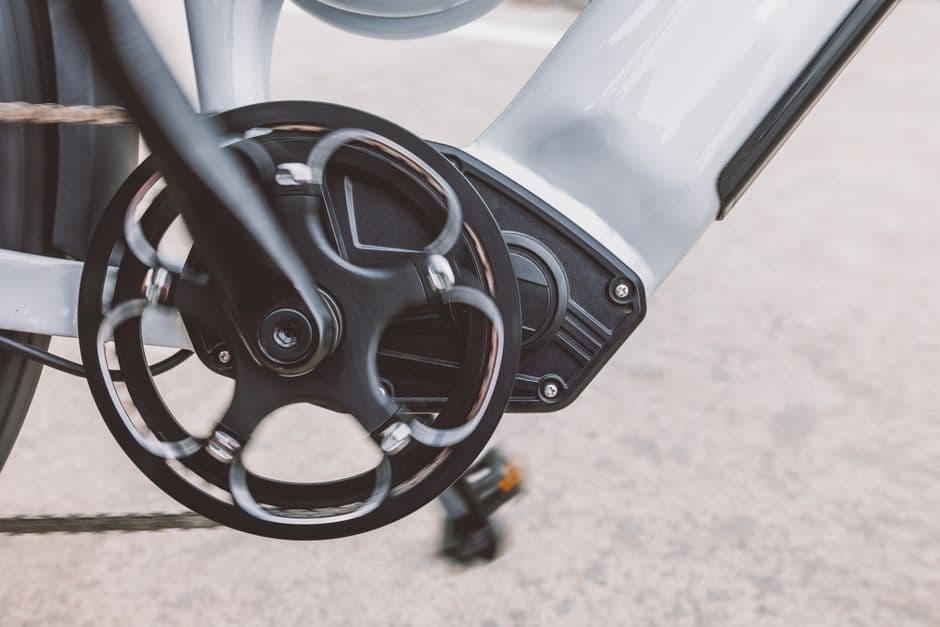
A mid-drive motor puts more torque through the chain than your legs alone ever would, which wears the chain and cassette faster than a comparable pedal-only bike. Lube the chain every couple hundred miles, or after riding in rain, and check chain stretch with a wear-indicator tool rather than by eye, a stretched chain quietly wears out your cassette and chainring too if you keep running it.
Wipe the chain down before lubing it. Lube applied on top of grit just grinds the grit into the pins instead of protecting them.
Torque-check the bolts a motor adds load to
Motor mount bolts, the stem, and the seatpost clamp all see more stress on an e-bike than on a regular bike, thanks to the extra weight and the motor's pulling force. Check these with a torque wrench against the spec in your manual every month or so, especially in the first few weeks after a new bike or a service, since fasteners settle and can loosen slightly as everything seats in.
A loose stem or seatpost clamp is one of the more common e-bike complaints that turns out to be a five-minute fix once someone actually checks torque instead of guessing.
Log battery cycles and service the same way you'd log a car
Battery health and brake pad wear are exactly the kind of thing that's easy to lose track of once you own more than one bike, or one bike plus a car. Wheelscribe's features let you log service against any vehicle, not just cars, so the last brake bleed or the battery's charge-cycle count is a search away instead of a guess.
It ties in with the same maintenance log habits that make sense for anything with wheels and a service interval, and it's free to start.
Frequently asked questions
How often should I charge my e-bike battery?
Charge after rides rather than letting it run all the way to empty, and unplug once it hits 100 percent instead of leaving it on the charger overnight. Frequent partial charges are easier on lithium cells than deep discharges followed by a full charge.
What charge level should I store an e-bike battery at?
Most manufacturers recommend storing at roughly 30 to 60 percent charge, at room temperature, if the bike will sit for more than a couple of weeks. Storing it fully charged or fully dead both accelerate capacity loss.
Can I use a different charger on my e-bike?
No. Mismatched or generic chargers are one of the most common causes of lithium battery fires in e-bikes, according to CPSC guidance, since each battery pack has specific voltage and current requirements the wrong charger can't safely meet.
How often do e-bike brake pads need to be checked?
Check pad thickness every month or two of regular riding. The extra weight and speed of an e-bike wear hydraulic disc pads faster than on a standard bicycle.
Why does an e-bike chain wear out faster?
A mid-drive motor puts more torque through the chain than pedaling alone, which speeds up chain and cassette wear. Lube every couple hundred miles and check for stretch with a wear-indicator tool rather than waiting until it looks obviously worn.
Which bolts should I check on an e-bike?
Motor mount bolts, the stem, and the seatpost clamp all see extra load from the motor's weight and torque, so torque-check them to spec every month or so, especially in the first few weeks after a new bike or a service.
Start logging your car's history
One car, unlimited entries, free forever. See pricing for what Pro adds.
Create free account