
Medium-Duty Truck Maintenance Schedule
A medium-duty truck maintenance schedule for dump trucks, flatbeds, and work trucks: PM intervals, hydraulic fluid, brakes, and DOT basics for Class 4-7 rigs.
What a medium-duty truck maintenance schedule actually covers
A medium-duty truck maintenance schedule is built around the trucks that don't fit anywhere else: dump trucks, flatbeds, tow trucks, bucket and utility rigs, and the bigger stake-bed trucks a landscaping crew, a construction outfit, or a trades business runs every day. These sit in the Class 4 through Class 7 range, roughly 14,001 to 33,000 pounds GVWR, heavier than the pickup in your driveway and nowhere near the tractor-trailers running interstate freight.
That distinction matters for the schedule itself. A half-ton pickup follows a light-duty interval built for a passenger-car duty cycle; our gas and diesel truck maintenance guide covers that end. A Class 8 owner-operator running interstate answers to a different rulebook entirely, the one our semi truck maintenance post walks through. A vocational Class 4-7 truck with a PTO-driven dump bed or a hydraulic boom needs a schedule that borrows pieces from both without matching either.
Engine oil, filters, and grease points on a mileage or hour clock
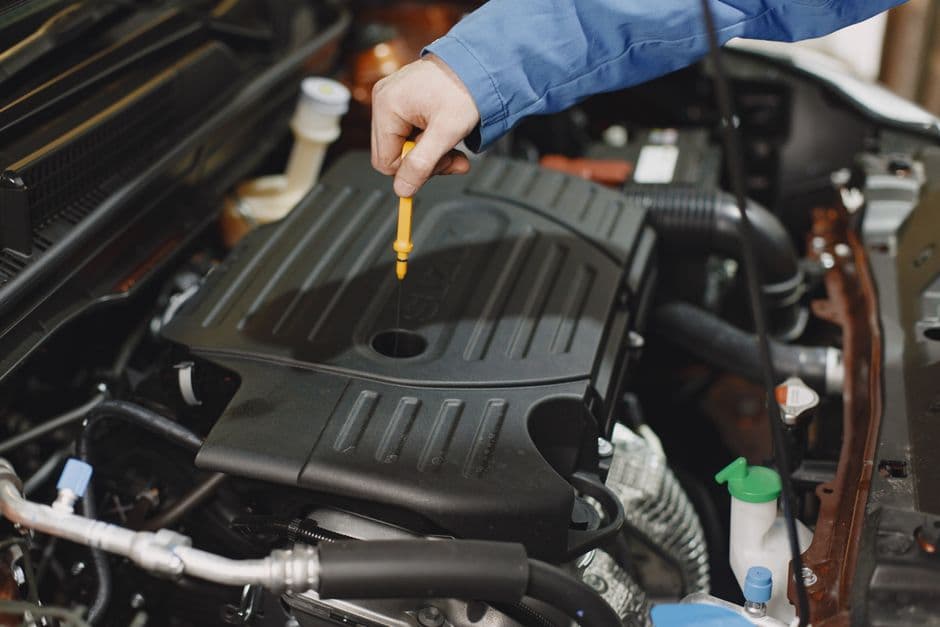
Run the oil and filter change every 10,000 to 15,000 miles, or every 250 to 300 engine hours, whichever comes first. Most medium-duty diesels (a Cummins ISB, a Ford 6.7L Power Stroke, a Duramax under a Class 4 chassis) want a 15W-40 diesel oil like Shell Rotella T4 or Chevron Delo 400, and a full synthetic like Rotella T6 can stretch the upper number a bit on a truck that runs mostly highway miles instead of idling at job sites. Parts alone usually run $150 to $220 for a service that size.
Grease every zerk at the same visit, not just the ones you remember. A dump truck or flatbed carries fittings a pickup never sees:
- Dump bed pivot pins and hoist cylinder pins
- Tailgate and tommy gate hinges
- Driveline U-joints and slip yokes
- Kingpins on a leaf-spring front axle
Skip a handful of those for two or three service cycles and you'll feel it as play in the steering or hear it as a squeak from the bed hinge that turns into a seized pivot.
Hydraulic fluid and PTO service: the dump truck maintenance schedule item owners skip
Change the hydraulic fluid running a dump bed, flatbed tommy gate, or bucket boom every 500 to 1,000 operating hours, or once a year on a truck that doesn't rack up enough hours to hit that number first. Use the ISO 46 (or AW46) hydraulic oil your PTO manufacturer specifies, not whatever quart is closest on the shelf, and swap the hydraulic filter at the same visit. Budget $300 to $600 for the fluid, filter, and labor depending on reservoir size.
These flatbed truck maintenance intervals get skipped constantly, since nothing about a slow hydraulic leak feels urgent right up until a cylinder seal fails mid-lift. Inspect the PTO itself while you're in there too: the clutch engagement, the pump mounting bolts, and any hose showing a bulge or a wet streak of fluid along its length. A PTO pump seizure doesn't just strand the truck, it can take the transmission's PTO gear with it, and that repair bill makes a $40 filter look like nothing.
Brake inspections built for a heavier GVWR
Check pad or lining thickness at every oil-change interval instead of waiting for a squeal, since a loaded medium-duty truck stopping repeatedly at job sites and traffic lights wears brakes faster than the same chassis running empty highway miles. Trucks in the Class 6-7 range often run air brakes with S-cam actuation instead of hydraulic discs, and those need a slack adjuster check added to the same inspection: too much stroke before the shoes engage is exactly what a roadside inspector is trained to catch.
There's no single federal mileage interval for brake service the way there is for an oil change, and the FMCSA doesn't set one either, leaving the interval to how the truck is actually used. Out-of-service brake violations are still one of the most common findings at roadside inspections, and they're one of the easiest things to catch early with a flashlight and a tape measure instead of finding out at a scale.
DOT annual inspection basics once you cross 10,001 pounds
Once a truck's GVWR (or gross combination weight, if you're pulling a trailer) crosses 10,001 pounds, it meets the FMCSA's definition of a commercial motor vehicle, and that pulls in a periodic inspection requirement even for a single dump truck that never leaves the county. Every CMV needs a documented inspection at least once every 12 months under 49 CFR 396.17, checking the same core systems (brakes, steering, tires, lights, coupling devices) a roadside inspector would look at.
Most states run a qualifying annual inspection program that satisfies this automatically, so check with your state's DMV or a certified inspection station rather than assuming you need a separate federal-only inspection. Crossing 26,001 pounds GVWR adds a CDL requirement for the driver, a separate rule from the maintenance side but worth knowing before you spec a truck's weight class. For the daily paperwork side of things, our semi truck maintenance post covers DVIRs and inspection reports in more depth than a vocational truck usually needs.

Building a work truck PM schedule for 1 to 5 vocational trucks
You don't need fleet management software built for a hundred trucks to run a real PM schedule for one dump truck or five. What you need is one place that tracks each truck's mileage and engine hours separately, since a dump truck idling at a job site racks up hours a lot faster than miles, and a box truck maintenance interval built on mileage alone will let hour-based hydraulic and PTO service slip past unnoticed.
I've seen a landscaping outfit run three dump trucks off a shared notebook kept in the glovebox of whichever truck was handiest, and the notebook was always in the wrong truck when it mattered. If your trucks are scaling past a stack of paper, our fleet maintenance scheduling guide covers mileage-versus-calendar triggers in more depth. Wheelscribe's service record log keeps oil, hydraulic, and brake intervals tied to each truck's own mileage and hours, and it's free to start with a single vehicle before you add the rest of the fleet.
Frequently asked questions
How often should a medium-duty truck get an oil change?
Most medium-duty diesels need an oil and filter change every 10,000 to 15,000 miles, or every 250 to 300 engine hours, whichever comes first. Trucks that idle heavily at job sites hit the hour limit before the mileage limit, so track both instead of mileage alone.
What counts as a medium-duty truck for maintenance purposes?
Medium-duty covers roughly Class 4 through Class 7, about 14,001 to 33,000 pounds GVWR: dump trucks, flatbeds, tow trucks, bucket trucks, and larger stake-bed trucks. That's heavier than a consumer pickup and lighter than a Class 8 semi, so the schedule borrows pieces from both without matching either.
How often should hydraulic fluid be changed on a dump truck or bucket truck?
Change the hydraulic fluid running a dump bed, tommy gate, or bucket boom every 500 to 1,000 operating hours, or once a year if the truck doesn't rack up enough hours to hit that number first. Swap the hydraulic filter at the same visit rather than treating it as a separate job.
Do medium-duty trucks need a DOT annual inspection?
Any truck with a GVWR or gross combination weight of 10,001 pounds or more meets the FMCSA's definition of a commercial motor vehicle and needs a periodic inspection at least once every 12 months. Most states run a qualifying annual inspection program that satisfies this requirement automatically.
How often should chassis grease points be serviced on a work truck?
Grease every zerk at the same interval as the oil change, typically every 10,000 to 15,000 miles or sooner for trucks working in mud or standing water. Dump beds, tommy gates, and driveline U-joints carry fittings a consumer pickup never has, and they're easy to miss without a written checklist each visit.
What's different about maintaining a box truck versus a dump truck or flatbed?
A box truck's schedule centers on the cab and chassis much like a cargo van's does, while a dump truck or flatbed adds a whole second maintenance track for the hydraulic system, PTO, and bed hardware. Both need the same brake attention at a heavier GVWR, but the hydraulic side is unique to trucks with a powered bed or boom.
Start logging your car's history
One car, unlimited entries, free forever. See pricing for what Pro adds.
Create free account