
Car Battery Maintenance Without the Guesswork
Car battery maintenance in plain terms: clean terminals, test voltage twice a year, avoid short-trip damage, and spot a dying battery before it strands you.
The short version of car battery maintenance
Car battery maintenance comes down to four habits: keep the terminals clean, keep the battery bolted down tight, test the voltage twice a year once the battery turns two, and never let it sit discharged for weeks. Do those four things and a typical lead-acid battery lasts its full three to five years instead of dying in the middle of a cold snap.
Most car battery maintenance tips you'll find online are variations on that list, padded out to twenty items. The padding isn't wrong, it's just optional. What matters is that a battery fails slowly and quietly, then all at once in a parking lot. The habits above catch the slow part while it's still cheap to fix. The rest of this post is detail on how to do each one without special tools.

Clean terminals, tight hold-down
Corrosion on the terminals is the most common battery problem you can fix in your driveway for about a dollar. That white or blue-green fluff builds resistance between the battery and the cables, so the starter gets less current and the alternator has a harder time pushing charge back in.
Disconnect the negative cable first, then the positive. Scrub the posts and clamps with a paste of baking soda and water using an old toothbrush or a wire brush, rinse with a little clean water, dry everything, and reconnect positive first, negative last. A thin coat of dielectric grease or terminal protector slows the fluff's return.
While you're in there, check that the hold-down bracket is snug. A battery that bounces around shakes its internal plates apart, and vibration damage doesn't show up until the battery quits early with no warning.
Test the voltage twice a year
A healthy battery reads about 12.6 volts after the car has sat overnight. That single number tells you more than any dashboard light will. At 12.4 volts you're at roughly 75 percent charge, and below 12.2 the battery needs a proper charge, not just a longer drive. With the engine running you should see between 13.7 and 14.7 volts, which means the alternator is doing its job.
A basic multimeter costs less than a pizza and takes thirty seconds to use. If you'd rather not own one, most auto parts stores will test the battery and the charging system for free, and their load test catches weak batteries that still show decent voltage. Do it every six months once the battery is past its second birthday, and write the number down. A slow slide from 12.6 to 12.3 over a year is the battery telling you its plans.
Short trips drain more than they put back
Starting the engine takes a big gulp of current, and a ten minute drive to the store doesn't pay it back. String enough short trips together and the battery spends its life partially discharged, which is the exact condition lead-acid chemistry hates most. Sulfation builds on the plates, capacity drops, and the battery ages years in months.
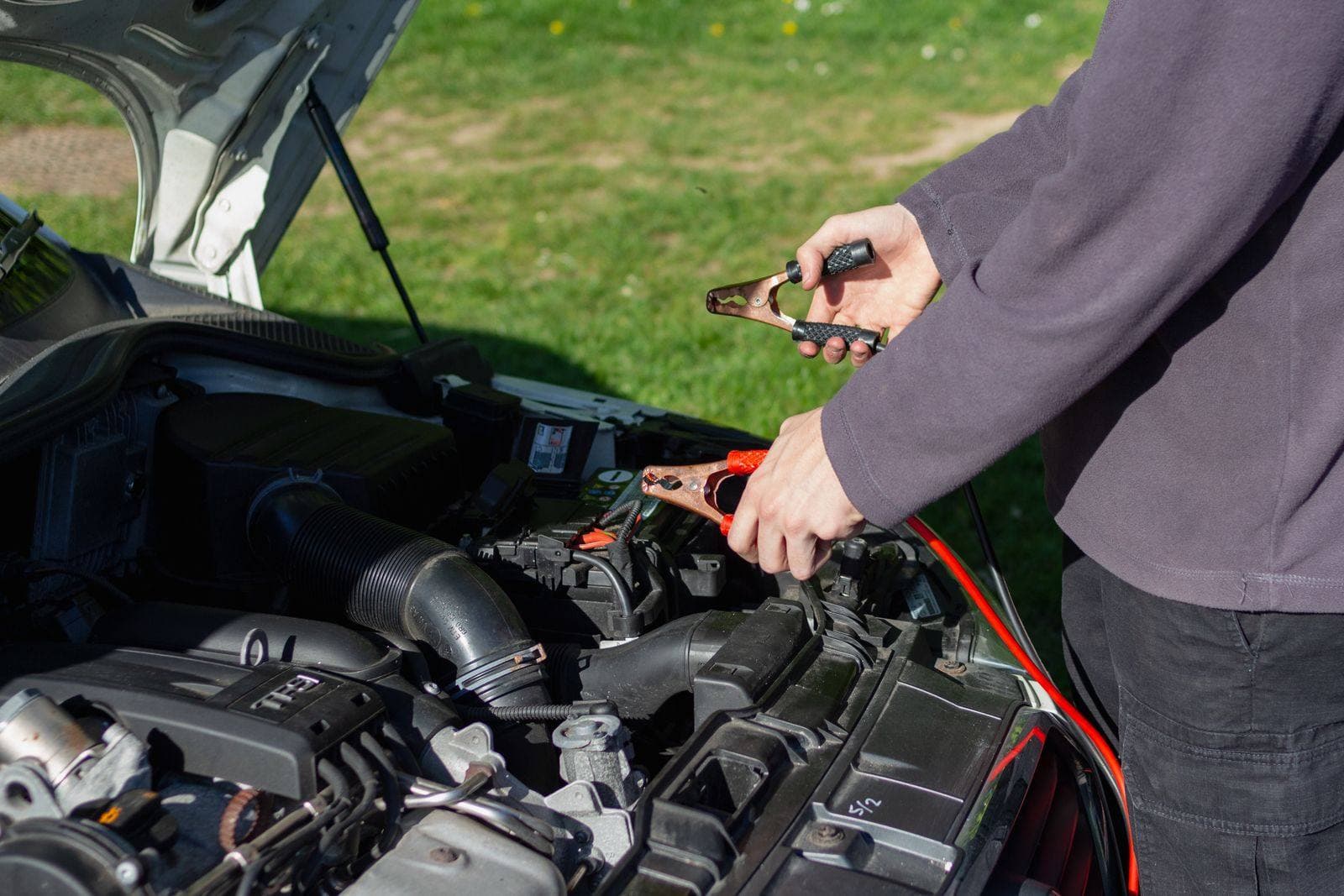
The fix is boring: once a week or so, give the car twenty to thirty minutes of real driving. For a project car or anything that sits, a battery maintainer (a smart trickle charger) is the difference between a battery that lasts six years and one that's junk every spring. The same habit covers vehicle battery maintenance for whatever else is in the garage, and truck battery maintenance follows identical rules, just with bigger batteries. Watch parasitic drains too: a hardwired dashcam or an aftermarket alarm sips current all night, every night.
Heat kills it, cold exposes it
Most batteries die in winter but were murdered in summer. Heat evaporates electrolyte and speeds up internal corrosion, so a battery in Phoenix might last three years while the same battery in Minnesota goes five or six. The cold morning that finally kills it just revealed damage that was already done.
Plan on replacing a standard battery every three to five years, and get it tested before road trips once it's past three. AAA keeps a good list of the warning signs: slow cranking, dim headlights at idle, and needing more than one jump in a season all mean the end is close. When you do swap it, take the old one back to the parts store. Nearly every part of a lead-acid battery can be recycled, and the EPA's guidance is to return it where you bought the replacement. Most stores also pay a small core refund for the trouble.
Give the battery a line in your maintenance log
The battery is the easiest thing in the car to track and the one everyone forgets. Log the install date, brand, group size, cold cranking amps, price, and where you bought it, because battery warranties are pro-rated by date and the receipt always vanishes. Then add your six-month voltage readings as you take them. Three years later, “is this battery original?” takes five seconds to answer instead of an archaeology dig through the glovebox.
Wheelscribe's entry form is built for exactly this kind of small dated record, and the free plan covers one car with unlimited entries, so the battery can live next to your oil changes instead of in a notes app or a spreadsheet you'll stop updating. If you're setting up intervals for the rest of the car while you're at it, our maintenance schedule guide covers how often everything else needs attention.
Frequently asked questions
How often should I do car battery maintenance?
Give the terminals a visual check a couple of times a year, and test the voltage every six months once the battery is more than two years old. That routine catches nearly every battery problem while it's still cheap to fix.
How long does a car battery last?
Three to five years for a standard lead-acid battery, four to seven for AGM. Hot climates land at the short end and cooler ones at the long end. Past year three, test it before any long trip.
Does idling the car charge the battery?
Barely. At idle the alternator produces a fraction of its output, and much of that goes to the car's electronics. A battery drained by short trips needs twenty to thirty minutes of real driving, or a few hours on a proper charger.
Should I disconnect the battery when storing a car?
A battery maintainer is the better option: it keeps the charge topped up without losing radio presets and computer settings. Disconnecting also works and stops parasitic drain, but the battery will still self-discharge slowly over the months.
Can a completely dead battery be recharged?
Sometimes. A slow charge on a proper charger may bring it back, but deep discharge permanently damages lead-acid plates, so test it afterward. If it won't hold 12.4 volts after a full charge and a night of rest, it's done.
Is it the battery or the alternator?
Check voltage with the engine running. Between 13.7 and 14.7 volts means the alternator is charging and the battery is the suspect. Below about 13 volts while running points at the alternator or its belt, even if the battery is healthy.
Start logging your car's history
One car, unlimited entries, free forever. See pricing for what Pro adds.
Create free account