
Car Inspection Checklist: What Gets Checked
A car inspection checklist covering what state safety inspections actually test: lights, tires, brakes, glass, and the small stuff that fails a car.
What a car inspection actually checks
A car inspection checklist looks different depending on where you live, since only about a third of states run a periodic safety inspection program at all, and a separate, larger group requires an emissions test instead or in addition. Where a safety inspection does exist, it almost always covers the same core list: lights and signals, tires and brakes, the windshield and wipers, the horn, and the exhaust system.
The list matters less than the pattern behind it: inspectors fail cars for cheap, overlooked items far more often than for anything expensive. Most failures are a burnt bulb or a worn wiper blade, not a blown head gasket, which makes a quick walk through the checklist the week before your appointment worth more than any specific repair budget.
Lights, signals, and the horn: the easiest automatic fails
Headlights, taillights, brake lights, turn signals, and reverse lights all get checked, and a single burnt bulb is enough to fail most inspections outright. Walk around the car with someone pressing the brake pedal and cycling the signals the night before, since this takes five minutes and catches the most common failure by a wide margin.
Headlight aim gets checked too in states with equipment inspections, and a horn that doesn't sound, or sounds weak, is an easy fail that most owners never think to test beforehand. None of these cost more than a bulb or a fuse to fix, but only if you find them before the inspector does.
Tires and brakes: the wear items inspectors measure
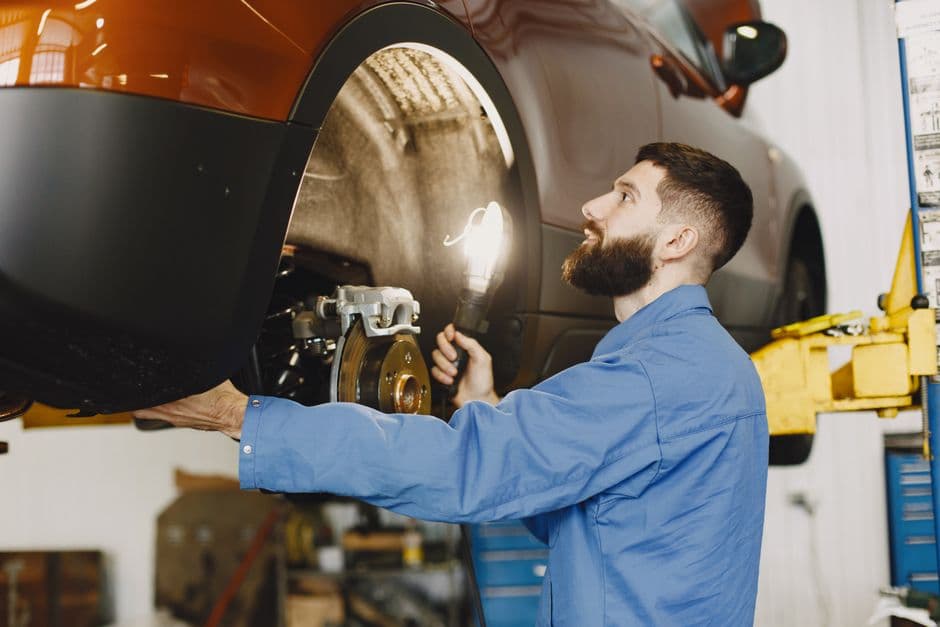
Tread depth gets measured against a minimum, commonly 2/32 of an inch, using a simple gauge or the penny test, and any tire below that fails regardless of how the rest of the car looks. Sidewall damage, visible cord, and mismatched tire sizes on the same axle are common secondary fails that don't show up unless someone's actually checking for them.
Brakes get a visual or measured check on pad thickness where the inspection covers it, and a pull to one side, a grinding noise, or a soft pedal are all things worth fixing before the appointment rather than finding out about it from the inspector. The routine maintenance checklist covers the same wear items on a schedule, so nothing here should be a surprise if you've been keeping up with it.
Windshield, wipers, and glass
A crack that crosses the driver's direct line of sight is an automatic fail in most states that check it, even if the same crack somewhere else on the glass would pass. Wiper blades that streak or skip are an easy, cheap fix that gets missed constantly because most people only notice a bad wiper blade when it's actually raining, not during a dry inspection appointment.
Window tint that's darker than your state allows is another item that trips up more cars than you'd expect, especially on vehicles bought used from a state with looser tint laws. Check your state's specific limit before the appointment if the windows look dark, rather than finding out at the inspection station.
Bring your service history, and know the retest rules
Most stations don't ask for maintenance records, but having a dated history of tire and brake work on hand makes it easy to answer a follow-up question if a borderline item comes up, and it's useful for your own tracking either way. According to AAMVA's inspection program guidance, most states that fail a car for a repairable item allow a free or low-cost retest within a set window once the item's fixed, so a failure usually means a quick repair and a return trip, not starting over.
The Car Care Council publishes a similar seasonal checklist worth running even in states with no mandatory inspection at all. Wheelscribe keeps every light bulb, tire, and brake job logged against the date and mileage in the car's timeline, so the week before an inspection is a five-minute review instead of a guessing game.
Frequently asked questions
What's the minimum tread depth to pass a vehicle inspection?
Commonly 2/32 of an inch, checked with a simple gauge or the penny test. Any tire below that fails regardless of the rest of the car's condition, and mismatched tire sizes on the same axle are a common secondary fail too.
What are the most common reasons cars fail inspection?
Burnt-out lights, worn wiper blades, and low tread depth top the list by a wide margin. Most failures are cheap, overlooked items rather than expensive mechanical problems, which is why a quick walk-around before the appointment catches most of them.
Does a cracked windshield fail a car inspection?
Usually only if the crack crosses the driver's direct line of sight, though rules vary by state. A crack elsewhere on the glass may pass in states that check windshield condition at all.
What happens if my car fails inspection?
Most states allow a free or low-cost retest within a set window once the failed item is repaired, so a failure typically means a quick fix and a return trip rather than starting the process over.
Do all states require a vehicle safety inspection?
No. Only about a third of states run a periodic safety inspection program, though a larger, separate group of states requires an emissions test instead of or in addition to a safety check.
Start logging your car's history
One car, unlimited entries, free forever. See pricing for what Pro adds.
Create free account