
The Complete Car Maintenance Checklist
A complete car maintenance checklist by interval: the quick checks, mileage milestones, fluids, tires, brakes, battery, and seasonal jobs, all in one place.
One checklist for the whole car
A good car maintenance checklist answers one question: what needs doing, and when. This is that checklist, organized the way a car actually asks for attention. Some items are quick monthly glances, some are tied to mileage milestones, and a few are seasonal. Nothing here requires being a mechanic. It requires knowing the list exists and keeping track of what you've already done.
Work through it top to bottom the first time to see where your car stands, then use it as a reference. Every section notes roughly how often each job comes due, and the deeper guides linked along the way go into the detail when you want it.

The monthly quick checks
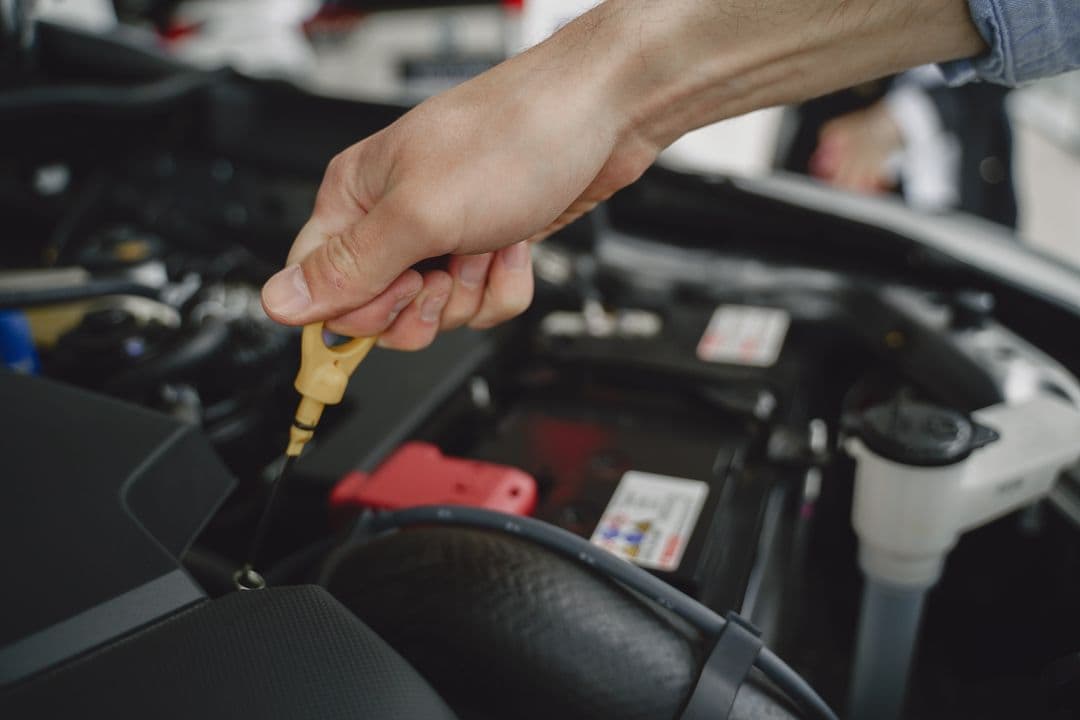
These take five minutes and catch most small problems before they grow. Once a month, with the engine cold and the car on level ground, check the engine oil level on the dipstick and top up if it's low. Look at the coolant overflow tank level (cap stays on), and glance at the brake and washer fluid reservoirs. Walk around the car and check tire pressure against the sticker in the driver's door jamb, not the number on the tire itself.
While you're there, test every light: headlights, brake lights, turn signals, and reverse lights, which is easier with a helper or a reflective garage door. Listen for new noises and note any warning lights on the dash. A monthly loop like this is the single highest-value maintenance habit there is, because it turns surprises into scheduled fixes. Write down anything you top up so a slow leak shows itself as a pattern.
The checklist by mileage
Most scheduled maintenance is keyed to mileage. The common pattern across modern cars looks like this. Every 5,000 to 7,500 miles: oil and filter change, tire rotation, and a general inspection. Around 15,000 to 30,000 miles: engine and cabin air filters, and a brake fluid flush. Around 30,000 to 60,000 miles: transmission fluid where the model allows, spark plugs on many engines, and often new brake pads. Around 60,000 to 100,000 miles: coolant, more spark plugs, and a timing belt if the engine uses one rather than a chain.
Your owner's manual has the exact numbers for your car, and they beat any generic chart. For a plain-English walk through why each interval exists and how to tell normal from severe service, the maintenance schedule guide covers it, and the big six-figure service gets its own breakdown in the 100,000-mile guide.
Fluids to check and change
Cars run on more than gas and oil. Engine oil is the headline, changed on the interval above with the correct grade and a new filter. Coolant is a wear item too: long-life formulas last around 5 years or 100,000 miles, older green coolant closer to 2 years or 30,000, and mixing types can gel and clog. Brake fluid absorbs moisture and needs a flush every 2 to 3 years even if the brakes feel fine. Transmission fluid is not truly lifetime on most cars; changing it around 60,000 to 100,000 miles pays off if you keep the car.
Power steering fluid (on hydraulic systems) and differential or transfer-case fluid on trucks and all-wheel-drive vehicles round out the list. The rule that saves engines and transmissions is simple: use exactly the fluid the manual specifies, never a close substitute. The right spec is cheap; the wrong one can be catastrophic. Log the type and brand every time so the next service isn't guesswork.
Tires and brakes
Tires are the only thing connecting the car to the road, so they earn close attention. Check pressure monthly and before long trips, rotate every 5,000 to 7,500 miles for even wear, and watch tread depth: the penny test (Lincoln's head disappearing) means you're getting close to replacement. Uneven wear points to alignment or suspension issues worth chasing down. Don't ignore the spare, and know where your jack and lug wrench actually are.
Brakes announce themselves. A squeal from the wear indicator, a grinding noise, a pulsing pedal, or a longer stopping distance all mean inspection time. Pads typically last 30,000 to 70,000 miles depending on driving, and rotors sometimes resurface or replace with them. Because brakes are the one system you cannot safely defer, treat any new brake symptom as a this-week job, not a someday one. The NHTSA tire guidance is a solid neutral reference for pressure and tread.
Battery and electrical
The 12-volt battery is the part most likely to strand you with zero warning. Most last three to five years, less in hot climates, and they tend to fail on the first cold morning after a hot summer cooked them. Keep the terminals clean and free of corrosion, make sure the battery is clamped down tight, and have it load-tested once it passes three years old. A test costs nothing at most parts stores and beats a no-start in a parking lot.
Beyond the battery, keep an eye on the alternator (dimming lights or a battery warning light), and replace wiper blades and burned-out bulbs as they go. The full routine, including how to spot a dying battery before it quits, is in the car battery maintenance guide. Electrical gremlins are easier to solve when you have a record of what was replaced and when.
Seasonal and climate items
A few jobs make sense twice a year rather than on a mileage clock. In spring, wash the undercarriage to clear road salt, check tires and swap off winter rubber, replace winter-shredded wiper blades, and test the battery the cold season may have weakened. In summer, the focus shifts to heat: confirm the AC blows cold, check coolant and hoses before the first heat wave, and watch tire pressure since hot pavement raises it.
In fall and winter, reverse it: check the battery and coolant mix for cold, confirm the heater and defroster work, and consider winter tires if you live where it snows. The seasonal and high-mileage jobs share a weakness, which is that long intervals are easy to forget, so both get a fuller treatment in the milestones and seasonal guide.
Turning the checklist into a record
A checklist tells you what to do. A record tells you what you've already done, and that's the half people skip. Without it, every interval becomes a guess: was the coolant changed at the last big service or the one before? Did the brake fluid ever get flushed? A printed checklist or a PDF is a fine start, but paper gets lost and doesn't remember mileage for you.
Wheelscribe keeps every service with its date, mileage, parts, and receipt photo in one timeline per car, so the checklist above becomes a running history instead of a recurring guess. The free plan covers one car with unlimited entries, and the FAQ answers the common setup questions. Whatever you track it in, the goal is the same: never wonder whether something on this list is overdue.
Frequently asked questions
What should be on a basic car maintenance checklist?
The essentials are monthly checks of oil, coolant, brake fluid, tire pressure, and lights; oil and filter changes with tire rotations every 5,000 to 7,500 miles; and interval jobs like air filters, brake fluid, spark plugs, coolant, and transmission fluid as mileage climbs. Battery and seasonal checks round it out.
What car maintenance should be done monthly?
Once a month, check the engine oil level, coolant and brake fluid reservoirs, tire pressure against the door-jamb sticker, and all exterior lights. Note any new noises or dashboard warning lights. This five-minute routine catches most small problems before they become expensive repairs.
What is the most important car maintenance?
Regular oil changes and tire care do the most to extend a car's life, and brakes are the item you can never safely defer. Beyond those, the highest-value habit is a monthly walk-around check, because catching a leak or a soft brake pedal early prevents far costlier failures.
How often should each fluid be changed?
Engine oil follows your car's interval, usually 5,000 to 10,000 miles. Coolant lasts about 5 years or 100,000 miles for long-life formulas, brake fluid every 2 to 3 years, and transmission fluid around 60,000 to 100,000 miles. Always use the exact fluid type your owner's manual specifies.
Is there a printable car maintenance checklist?
A printed page or PDF works as a starting reference, but paper gets lost and won't track mileage or store receipts. A running digital log keeps each service with its date, mileage, and cost, so you can see at a glance what's done and what's overdue rather than reconstructing it.
Start logging your car's history
One car, unlimited entries, free forever. See pricing for what Pro adds.
Create free account