
Tracking Extended Warranty & Service Contracts
How to track an extended warranty or service contract: coverage terms, expiration dates, mileage caps, and the maintenance records a claim requires.
What an extended warranty actually covers
An extended warranty is almost never actually a warranty. What you buy from a dealer or a third-party company after the factory coverage ends is technically a vehicle service contract: a separate paid agreement, backed by an administrator, that promises to cover specific repairs. Keeping accurate extended warranty records starts with that distinction, because a service contract reads and pays out differently than the bumper-to-bumper coverage that came with the car when it was new.
Most contracts fall into one of two tiers. Powertrain coverage handles the engine, transmission, and drivetrain, the expensive stuff, and little else. Exclusionary coverage, often marketed as bumper-to-bumper, covers everything except a printed list of exclusions, usually wear items like brake pads, wiper blades, and tires. Read the contract booklet itself rather than the sales pitch, since the covered-components list in that document is what a claims adjuster checks against, not whatever you remember being told at the table.

Tracking coverage start, expiration, and mileage caps
A service contract runs against two limits at once, a calendar date and an odometer reading, and coverage ends the moment either one is hit, whichever comes first. The FTC's overview of auto warranties and service contracts confirms this is how nearly every contract is structured: a set number of months or miles, not indefinite coverage. A 5-year, 60,000-mile contract on a car you drive hard can run out on mileage years before the date does, and a low-mileage driver can watch the date expire with plenty of coverage miles still unused.
Write down the exact start date, expiration date, and mileage cap from the contract the day you buy it, not from memory months later. Wheelscribe's mileage-based reminders can flag your car as it nears either limit, so you get advance notice while there is still time to schedule a covered repair, instead of finding out the coverage already lapsed the day something breaks.
Why your maintenance records determine whether a claim gets paid
Every service contract has a maintenance requirement buried in the fine print, and it's the single most common reason a legitimate claim gets denied. The contract obligates you to keep up with the manufacturer's recommended service schedule, oil changes especially, and the administrator can deny a claim if the failed part looks like it resulted from neglect rather than a covered defect.
The administrator doesn't need to prove neglect outright, only make a plausible case, and a missing oil change history at the right mileage intervals is exactly the gap that case needs. This is the same logic that governs a manufacturer's factory warranty; our guide to DIY maintenance and warranty coverage covers how that plays out for original factory coverage, and the same discipline protects a purchased service contract just as well.
What documentation a claim requires
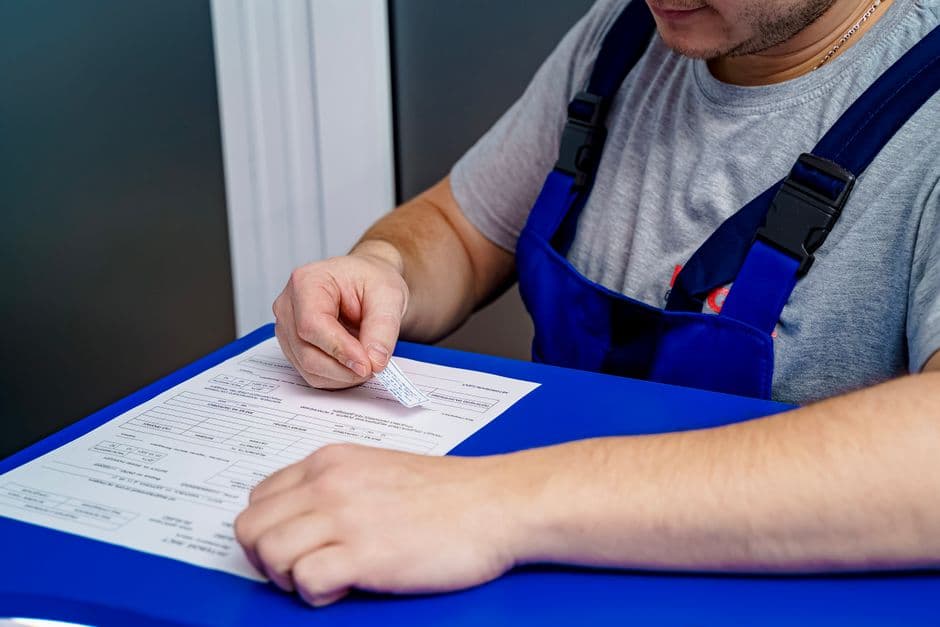
A clean claim needs the date, mileage, and description of every scheduled maintenance item, plus the receipt or invoice proving it happened, whether you did the work yourself or paid a shop. Save the paperwork itself, not just a memory of paying for it. An adjuster wants proof tied to a specific date and mileage, not a general impression that the car was cared for.
For the repair itself, keep the diagnostic writeup, the estimate, and photos of the failed part if the shop can provide them, since some administrators want to see evidence of the failure before authorizing a teardown. A maintenance log that already captures the date, mileage, and service detail for every entry turns a claim from a scramble through a glovebox and an old email inbox into something you can hand over in minutes.
Extended warranty coverage doesn't replace good maintenance habits
A service contract pays for a failure, it doesn't prevent one, and owners who treat the contract as a reason to skip routine service usually end up worse off. The same neglect that makes the contract irrelevant to prevention is the neglect an administrator can point to when denying the claim built on it. The contract is a backstop, not a maintenance plan.
It helps to treat the coverage period like any other ownership stretch: stick to the interval in the owner's manual, keep the receipts, and the contract mostly stays in the background doing exactly what it's for, covering the one component that fails anyway despite good care. That's a very different position than trying to reconstruct three years of scattered service history after a transmission goes and a claim is already on the line.
Service contract tracking that holds up when you file a claim
The owners who collect on an extended warranty claim without a fight are usually the ones who never had to go looking for the paperwork, because it was already attached to the right car and the right date. A shoebox of loose receipts is technically a record, but it's not one you can hand over quickly when an administrator asks for three years of service history on short notice.
Wheelscribe's entry form attaches the receipt, mileage, and service date to each job as you log it, so the full history is already assembled before you ever need it for a claim. It's free to start with one car, which is enough to keep a service contract's maintenance requirement fully documented from the day coverage begins to the day it expires.
Frequently asked questions
What does an extended car warranty actually cover?
It depends on the tier. Powertrain coverage handles the engine, transmission, and drivetrain. Exclusionary coverage, often marketed as bumper-to-bumper, handles everything except a printed list of exclusions, usually wear items like brakes, wipers, and tires. Check the contract booklet, not the sales pitch, for the exact list.
Is an extended warranty the same thing as a factory warranty?
No. A factory warranty comes with the car and is backed by the manufacturer. An extended warranty bought afterward is technically a vehicle service contract backed by a third-party administrator, with its own terms, exclusions, and claims process that can differ significantly from the original coverage.
What records do I need to keep for an extended warranty claim?
Keep the date, mileage, and receipt for every scheduled maintenance item, especially oil changes, plus any diagnostic paperwork tied to the repair. Administrators look for proof the manufacturer's service schedule was followed, not just a general sense that the car was maintained.
Can an extended warranty be denied over missing maintenance records?
Yes. Most contracts require proof that scheduled maintenance was performed on time, and a missing record around the right mileage gives the administrator grounds to argue neglect caused the failure instead of a covered defect, even without proving it outright.
What happens if I hit the mileage cap before the contract's expiration date?
Coverage ends the moment either limit is reached, so hitting the mileage cap early ends the contract even if the calendar date is still months or years away. Tracking both numbers, not just one, is the only way to know which limit will hit first.
Does doing my own maintenance void an extended warranty?
Not by itself. As long as you use the correct parts and fluids and keep a record of what was done and when, doing your own maintenance doesn't put the contract at risk. The real risk is skipping the paperwork, since an administrator can't verify work that was never documented.
Is an extended warranty worth buying if I already keep good maintenance records?
That depends more on the specific car and contract price than on your record-keeping habits. Good records don't make a contract worth buying, but they do make sure that if you already have one, a legitimate claim doesn't get denied over a paperwork gap instead of a real coverage issue.
Start logging your car's history
One car, unlimited entries, free forever. See pricing for what Pro adds.
Create free account