
Fleet Maintenance Record Keeping That Holds Up
How small fleets should structure fleet maintenance records so they survive audits, warranty disputes, resale, and insurance claims.
What fleet maintenance records actually need to capture
Fleet maintenance records only earn their keep when every entry captures the same fields, every time, for every vehicle: the date, the odometer reading, what was done, who did the work, the cost, and the specific parts or fluids used. Drop any one of those and the record turns into a vague memory aid instead of something you could hand an insurer or a buyer. For a single car, that's the whole list. For a fleet, add one more: which vehicle. A truck number or plate sounds obvious until you're holding three years of invoices for six nearly identical white work vans, trying to remember which one actually threw the check engine light in March.
This post isn't about what to inspect or how often. Our fleet vehicle maintenance checklist already covers that ground. This is about the records themselves: what to capture, how to organize it across several vehicles, and why it matters far more than people expect, right up until the day they need it.
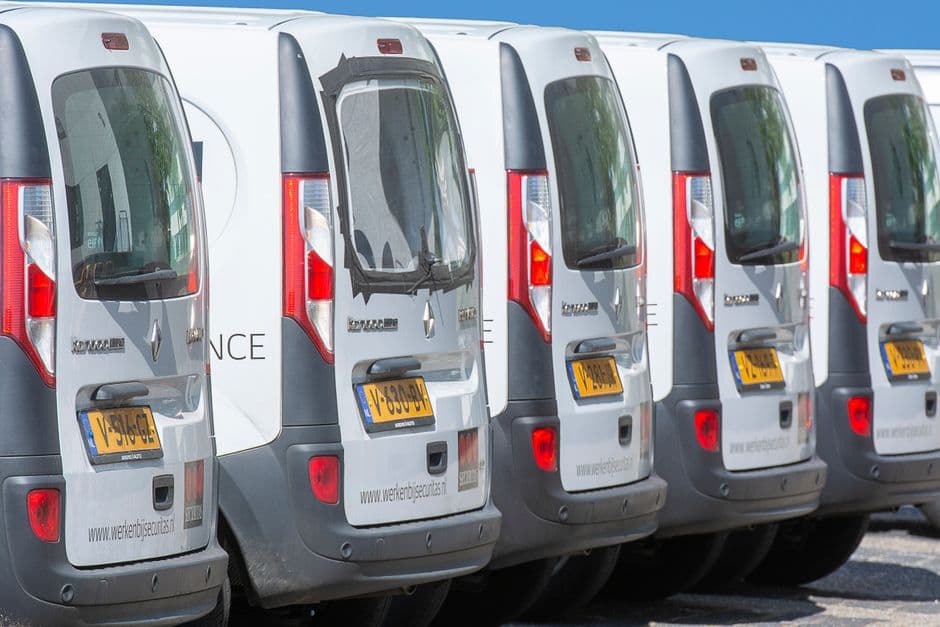
One record per vehicle, one view across the whole fleet
Every vehicle in the fleet needs its own dedicated history, the same way a person needs their own chart instead of one shared with five coworkers. Mixing records, one spreadsheet tab per year instead of per vehicle, or a shoebox of receipts sorted by date instead of by truck, turns a simple question like “when did van three last get brakes” into a search project instead of a lookup.
But per-vehicle isn't the whole picture. You also need to see the fleet as a whole: which vehicle costs more to keep running than the others, which one is due for service this month, which one has the same repair showing up every few months. That fleet-wide view is what tells you when a vehicle has quietly crossed from asset to liability. Wheelscribe for small fleets keeps a full history for each vehicle and a garage view across all of them, so you can answer either kind of question without switching tools.
Why a shared spreadsheet stops working around vehicle five or six
A spreadsheet works fine for one truck and one person maintaining it. It starts to strain at three or four vehicles with multiple drivers, and it usually breaks by the time a small fleet hits five or six: two people edit it at the same time and one version overwrites the other, a driver forgets to update their tab after a repair, and nobody notices until the gap costs something. Most of that traces back to a single shared file being stretched to do a job it was never built for. The spreadsheet is just the messenger.
There's also nowhere to put the evidence. A spreadsheet cell can hold “$340, brake job,” but it can't hold the actual invoice, a photo of the worn pad, or the shop's work order, which is exactly what an insurer or a warranty department wants to see, not your summary of it. If you're deciding whether to keep patching a shared sheet together, this breakdown of where spreadsheets hold up and where they don't is worth reading before you sink more time into one.

What complete records are worth when you sell a fleet vehicle
A complete maintenance record is the single best thing you can hand a buyer when a fleet vehicle ages out and gets sold. It turns a vague claim, “we kept up with it,” which is what every seller says, into something a buyer or a used commercial vehicle dealer can verify: dated service, real mileage, real parts. Fleet vehicles usually see harder use than personal cars, so buyers are already skeptical going in. A real record is what closes that gap.
This matters more, not less, as the fleet grows, because you're not selling one vehicle every few years, you're rotating trucks and vans out on a schedule, and doing that without a record for each one means re-litigating the same trust problem every single time. Wheelscribe's exportable service history hands a buyer the whole file instead of a stack of loose receipts, which is usually the difference between a quick sale and a week of back and forth over price.
Records are what get you through a warranty dispute or an insurance claim
When a warranty claim gets denied, it's rarely because the required service wasn't done. It's because nobody can prove it was done on schedule, at the odometer reading the warranty terms require. The same problem shows up after an accident, when an insurer wants documented service history before it will process a claim with a mechanical factor, and the fleet's answer is a shrug and a guess at when the brakes were last touched.
Paperwork only helps if it can survive being asked for, which has little to do with how much of it you keep. The IRS applies a similar standard to vehicle expense records claimed for tax purposes: it wants a record made at or near the time of the expense, not reconstructed from memory months later, according to Publication 463. A fleet maintenance record built the same way, logged the day the work happens, holds up under exactly the kind of scrutiny a claim or a dispute brings. The U.S. Chamber of Commerce's rundown of fleet tools for small businesses makes a similar point: the record has to already exist by the time you need it, since assembling one afterward rarely convinces whoever is asking.
Setting this up without paying for fleet software you don't need
Most fleet management platforms are priced and built for hundreds of vehicles, with telematics and route planning bundled in whether you use it or not. A landscaping company with four trucks or a delivery outfit with seven vans doesn't need any of that. What actually solves the record problem is a consistent, dated, per-vehicle log that people on the team use without being reminded to.
Wheelscribe's Business plan covers unlimited vehicles, photos, and exports for $25 a month, built around exactly this size of operation instead of scaling up from a single-car app or down from enterprise fleet software. If the fleet is closer to five vehicles, the Enthusiast plan covers that at a lower price. Either way, the record already exists by the time a claim, a sale, or an audit comes looking for it, which beats scrambling through a glovebox at the worst possible moment.
Frequently asked questions
What should a fleet maintenance record include for each vehicle?
Date, odometer reading, description of the work, who performed it, cost, and the specific parts or fluids used, tied to that one vehicle's identifier. Miss the per-vehicle identifier and even complete records become hard to sort out once the fleet grows past a couple of trucks.
How long should a small business keep fleet maintenance records?
There's no single deadline that covers every situation, but a good rule is to keep records for as long as you own the vehicle, plus at least a year after you sell it, since warranty and insurance questions can surface after the fact.
Do I need fleet management software to keep good maintenance records?
Not for a handful of vehicles. Fleet management platforms are built and priced for much larger operations, with telematics and route planning most small fleets never touch. A per-vehicle log with a fleet-wide view covers the actual record-keeping need without the extra cost.
What happens if a fleet vehicle doesn't have maintenance records at resale?
Buyers assume the worst and price accordingly, or walk away entirely if they're a commercial buyer used to seeing full histories. A documented record turns a seller's claim into something a buyer can verify, which speeds up the sale and usually protects the price.
Can spreadsheet-based fleet maintenance records hold up in an insurance claim?
They can, as long as the entries are complete, dated, and backed by the actual invoices rather than a paraphrase. The bigger risk with a shared spreadsheet is gaps and overwritten entries once more than one person is updating it, and that's usually the first thing an insurer flags.
How is fleet maintenance record keeping different from a maintenance checklist?
A checklist covers what to inspect and how often, the tasks themselves. Record keeping covers what happens after the task is done: capturing it in a way that survives an audit, a warranty dispute, or a sale. A fleet needs both, but they solve different problems.
Start logging your car's history
One car, unlimited entries, free forever. See pricing for what Pro adds.
Create free account