
Fuel Economy & MPG Tracking Guide
How to track fuel economy accurately: calculating real MPG, what a sudden drop actually means, and keeping a fuel log alongside your maintenance record.
Why track fuel economy at all
Fuel economy tracking turns a vague feeling of “this car seems thirstier lately” into an actual number you can compare against last month, last year, or the EPA sticker on the window when it was new. That number is also one of the earliest warning signs of a developing mechanical problem, often showing up weeks before a check engine light does.
A dashboard trip computer gives you a rough average, but it's an estimate, not a measurement, and it usually resets before you've built up enough data to spot a real trend. A logged fuel history, fill-up by fill-up, is the only version accurate enough to catch a gradual five or ten percent drop instead of just noticing when it's already bad.
How to calculate MPG accurately
The tank-to-tank method is the most reliable: fill up completely, reset your trip odometer or note the total odometer reading, and drive until your next fill-up. Divide the miles driven by the gallons it took to fill the tank back up, and that's your real-world MPG for that stretch, not an estimate from a computer guessing at injector pulse width.
One fill-up is noisy data. Highway versus city driving, weather, and even how full you pump the tank each time introduce enough variation that a single number doesn't mean much. What matters is the trend across ten or twenty fill-ups, which smooths out the noise and makes a genuine decline obvious instead of buried in normal variation.
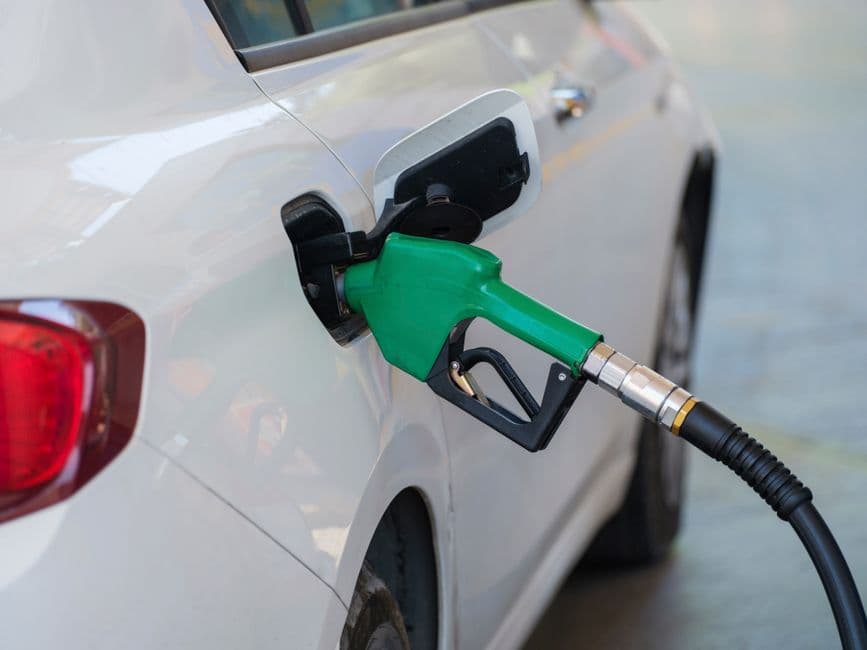
What a fuel log should capture each fill-up
At minimum, record the date, odometer reading, gallons pumped, and price paid. That's enough to calculate both MPG and cost per mile over time. If you want a sharper picture, note whether the tank was fully topped off, since a partial fill throws off the math for that entry and the one after it.
Fuel type matters too, especially if you occasionally run a higher octane or a different blend than usual. A fuel log that's just numbers in a notebook works, but it's easy to lose or forget to update after a few busy weeks, which is exactly the gap that lets a real MPG decline go unnoticed for months.
What a sudden MPG drop actually tells you
A gradual decline over months is often just tires wearing down or the change of seasons, since cold weather and winter blend fuel both reduce real-world MPG. A sharper drop, five to ten percent or more over just a few fill-ups, points somewhere specific: underinflated tires, a clogged air filter, a failing oxygen sensor, or a wheel alignment pulling the car off center.
The EPA's fuel economy maintenance guidance lists several of these as common, fixable causes, which is the useful part: a logged MPG drop gives you a reason to check something specific instead of just shrugging and paying more at the pump every week.
Cost per mile: turning fuel logs into a real number
Once you've got a few months of fill-ups logged, cost per mile is a five-second calculation: total fuel spend divided by miles driven over that stretch. It's the number that actually answers “is this car getting more expensive to run,” since gas prices swing independently of your car's actual efficiency and can mask a real mechanical decline if you're only watching the pump total.
This is also the number worth comparing against the EPA's official fuel economy ratings for your specific model. A car running noticeably below its rated MPG for its driving conditions, after accounting for city versus highway mix, has room for a maintenance check that could pay for itself in fuel savings alone.
Paper log, spreadsheet, or app for fuel tracking
A paper log works for a while, right up until the notebook goes missing or you forget it at home on fill-up day. A spreadsheet fixes the durability problem but still needs manual math for MPG and cost per mile each time, and doesn't connect that fuel data to whatever maintenance you did the same month, like a new air filter that should've bumped the number back up.
If you're tracking fuel purely for tax or reimbursement purposes rather than efficiency trends, our guide to mileage logs for taxes covers that specific requirement, which cares about business miles driven rather than gallons burned.
Keeping fuel data with the rest of your maintenance record
The real value of fuel tracking shows up when it sits next to your service history instead of in a separate app. A fuel log alone tells you MPG dropped in March. A fuel log next to a maintenance log tells you it dropped two weeks after the last tire rotation, or that it never recovered after a specific repair, which is the kind of pattern our maintenance log guide is built around capturing.
Wheelscribe's entry form keeps mileage entries and fuel notes tied to the same timeline as every service item, so a real MPG decline is something you can trace back to an actual date instead of a fuzzy memory of “sometime this spring.” It's free to start with one car.
Frequently asked questions
What's the most accurate way to calculate MPG?
The tank-to-tank method: fill up completely, track miles driven until the next fill-up, then divide miles by gallons used to refill. It's more accurate than a dashboard trip computer, which estimates rather than measures actual fuel consumed.
How much should fuel economy vary between fill-ups?
Some variation is normal due to driving conditions, weather, and how full you fill the tank each time. Watch the trend across ten or twenty fill-ups rather than reacting to any single reading, which smooths out normal noise and makes a genuine decline obvious.
What causes a sudden drop in fuel economy?
Common causes include underinflated tires, a clogged air filter, a failing oxygen sensor, or a wheel alignment issue. A sharp drop of five to ten percent or more over a few fill-ups is worth investigating rather than dismissing as normal variation.
What should I record in a fuel log?
At minimum: date, odometer reading, gallons pumped, and price paid. That's enough to calculate MPG and cost per mile. Noting whether the tank was fully topped off improves accuracy, since a partial fill skews the math for that entry.
Is tracking fuel economy the same as keeping a mileage log for taxes?
No. Fuel economy tracking measures how efficiently a car burns gas, useful for spotting mechanical problems and cost trends. A mileage log for taxes tracks business miles driven for a tax deduction or reimbursement, a different purpose with different required fields.
Why does fuel economy usually drop in winter?
Cold weather increases engine warm-up time, tire rolling resistance, and aerodynamic drag from denser cold air, while winter-blend fuel also carries slightly less energy per gallon. A modest winter MPG dip is normal and not necessarily a sign of a mechanical problem.
Start logging your car's history
One car, unlimited entries, free forever. See pricing for what Pro adds.
Create free account