
Golf Cart Maintenance: What to Check
Golf cart maintenance splits into electric and gas care. What to check on the battery, engine, tires, and brakes to keep a cart running for years.
Golf cart maintenance depends on what's under the seat
Golf cart maintenance splits into two almost unrelated jobs depending on whether the cart is electric or gas. An electric cart lives and dies by its battery bank, while a gas cart is a small combustion engine with a body kit, closer in spirit to a lawn mower than to a car. Mixing up the two routines is the fastest way to shorten a cart's life, so the first step is knowing which one you actually own.
Neighborhood carts titled as low-speed vehicles (LSVs) add a third wrinkle: federal rules require them to carry lights, mirrors, seat belts, and a windshield that a course-only cart doesn't need, and those parts need their own place on a maintenance checklist. None of this is complicated once you separate it out, which is the point of a dated maintenance log instead of trying to remember it season to season.
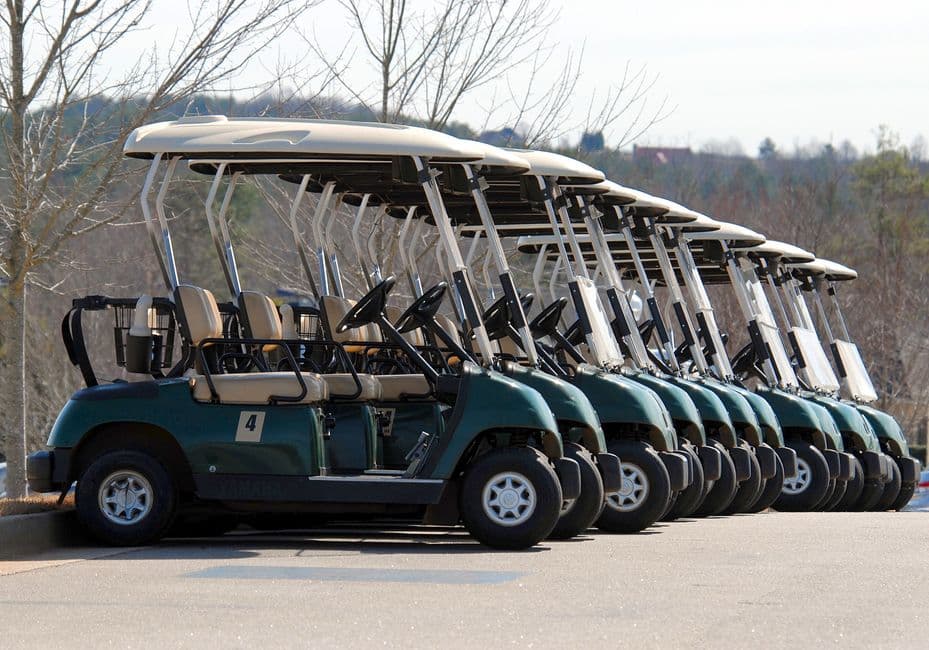
Battery maintenance for electric golf carts
Flooded lead-acid battery banks, still the most common setup, need a water check about once a month and always after a full charge, never before one. Add distilled water only until the plates are covered by roughly a quarter inch, and stop well short of the fill well. Water added to a discharged battery gets pushed out and wasted the next time it charges, and it leaves the acid concentration wrong in the meantime.
Letting the water level drop far enough to expose the plates is the single most common way owners kill a golf cart battery bank early: the exposed lead sulfates and that capacity loss doesn't come back. Keep terminals clean and lightly greased to slow corrosion, and charge after every use rather than letting a pack sit partially discharged for days, which is the other habit that quietly shortens a bank's life. A more detailed battery watering guide covers cell-by-cell technique if a bank has gone unwatered for a while.
Engine maintenance for gas golf carts
Gas carts run small four-stroke engines that need the same basics as any small engine: oil changed roughly every 100 hours or once a season, whichever comes first, and an air filter checked more often than that if the cart sees dusty fairways or a dirt driveway. A clogged filter is the most common reason a gas cart loses power on hills long before anything else goes wrong with it.
Pull and inspect the spark plug once a season, and replace it if the electrode looks worn or fouled rather than waiting for a no-start. Old fuel left sitting over winter gums up the carburetor faster on a small engine than on a car, so either run the tank dry before storage or add a stabilizer to whatever's left in it.
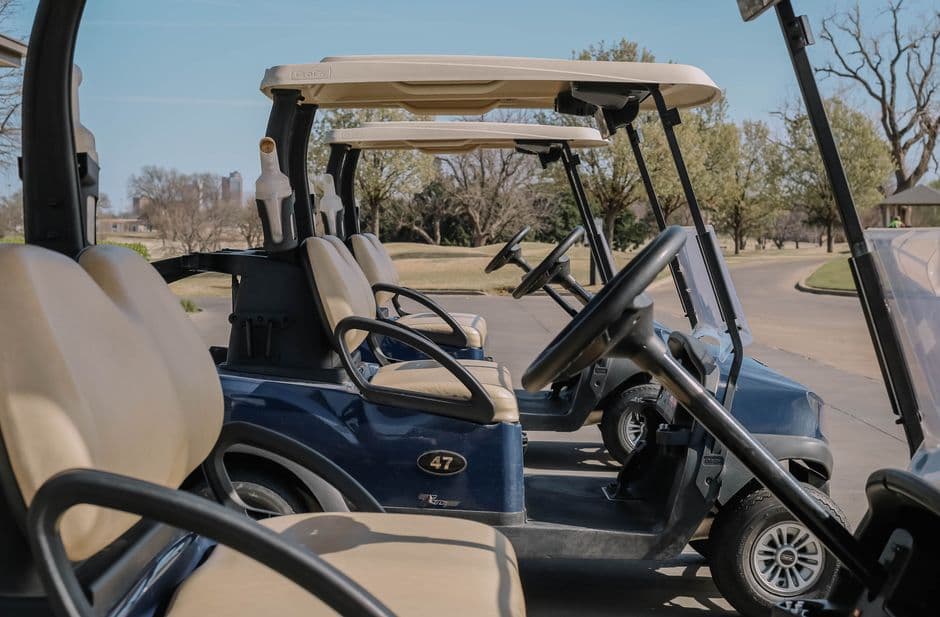
Tires, brakes, and the LSV equipment list
Golf cart tires run low pressure by design, usually 18 to 22 psi, but check monthly anyway since a soft tire on a light cart is easy to miss just by looking. Brakes are mechanical drum or disc setups on most carts and rarely need more than an annual adjustment check, but don't skip it: a cart with marginal brakes on a hill is a real hazard, not a minor inconvenience.
If the cart is titled as a low-speed vehicle for street use, federal standard FMVSS No. 500 requires headlights, taillights, turn signals, mirrors, a horn, seat belts, and a windshield, and all of that needs the same periodic check as the drivetrain. A dead turn signal or a cracked windshield can turn a routine stop into a ticket in states that patrol LSV routes.
Off-season storage
A cart parked for the winter needs the same prep as any vehicle sitting unused for months: top off or disconnect an electric cart's battery rather than leaving it to self-discharge, stabilize the fuel in a gas cart, and get the tires off the concrete with a slight overinflation or a set of jack stands to avoid flat spots by spring.
Keeping a record instead of guessing next season
The reason golf cart maintenance goes sideways so often isn't that the tasks are hard, it's that a cart doesn't get driven daily, so a slipping habit doesn't show up until the battery bank is already ruined or the engine won't start after a winter in the garage. A dated log of watering, oil changes, and tire checks closes that gap the same way it does for a car in the garage.
Wheelscribe tracks a golf cart the same way it tracks any other vehicle, with one timeline for watering, oil, and tire checks instead of a memory that resets every spring. The free plan covers a single cart without needing a paid tier.
Frequently asked questions
How often should I water a golf cart battery?
Check roughly once a month, always after a full charge rather than before one. Add distilled water only until the plates are covered by about a quarter inch, since overfilling wastes water and underfilling exposes and permanently damages the plates.
How often should I change the oil in a gas golf cart?
About every 100 hours of use or once a season, whichever comes first. Gas carts run small four-stroke engines that need the same basic oil and air filter care as any small engine, just on a shorter interval than a car.
What's the difference between a golf cart and a low-speed vehicle?
A low-speed vehicle (LSV) is a golf cart titled for limited street use, which under federal standard FMVSS No. 500 requires headlights, turn signals, mirrors, seat belts, and a windshield that a course-only cart doesn't need.
What tire pressure should a golf cart run?
Most golf cart tires run 18 to 22 psi, much lower than a car. Check monthly, since a soft tire is easy to miss on a light cart just by looking at it.
How do I store a golf cart for the winter?
Disconnect or maintain an electric cart's battery so it doesn't self-discharge over months, stabilize the fuel in a gas cart, and slightly overinflate the tires or use jack stands to prevent flat spots from sitting in one place.
Start logging your car's history
One car, unlimited entries, free forever. See pricing for what Pro adds.
Create free account