
How to Jump-Start a Car (Step by Step)
How to jump-start a car safely: the exact jumper cable order, what to do if it still won't start, and how to keep the battery from dying on you again.
How to jump-start a car, step by step
To jump-start a car, you connect a healthy battery to the dead one with jumper cables, let it feed power for a minute, then start the dead car. That's the whole trick. The part people get wrong is the order of the clamps, which matters more for your safety than for whether the engine turns over. Here's the sequence that works every time:
- Park the cars nose to nose, close enough for the cables to reach, both ignitions off and in park.
- Red clamp onto the dead battery's positive (+) post.
- Other red clamp onto the good battery's positive (+) post.
- Black clamp onto the good battery's negative (-) post.
- Last black clamp onto bare metal on the dead car's engine block, a bolt or bracket, not the battery.
- Start the working car, wait a minute or two, then start the dead one.
Once it fires up, leave both engines running and pull the clamps off in reverse order. Then keep the revived car running, or better yet drive it for twenty minutes or so, so the alternator can put back the charge you just borrowed.
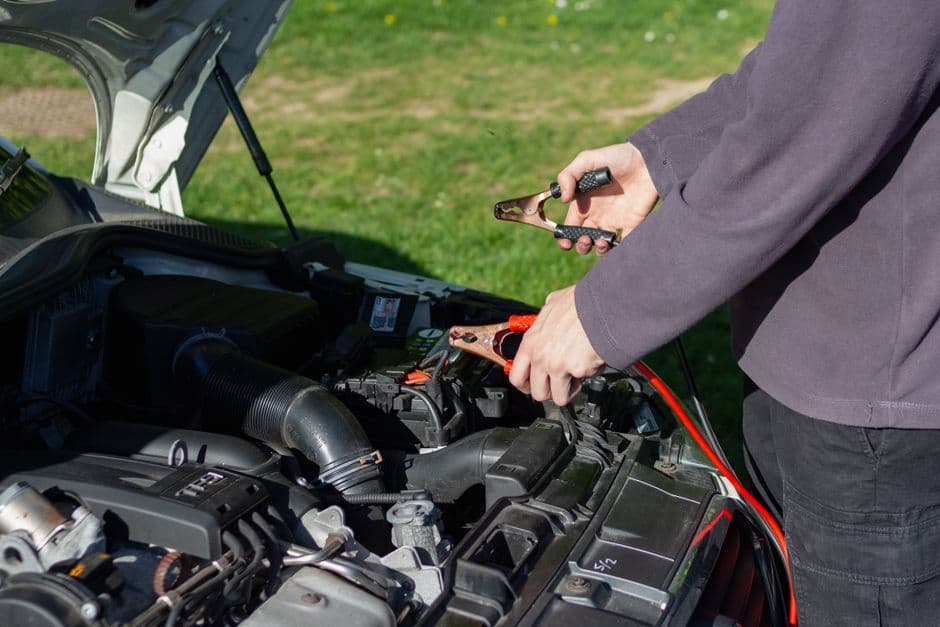
Which jumper cable connects first, and why the order matters
Red first, and always start on the dead battery. The phrase worth memorizing is red to dead, red to donor, black to donor, black to ground. You hook up both positive (red) ends before you touch anything negative, because a loose positive clamp swinging near bare metal is how you get sparks and a scare.
The odd one out is that final black clamp. Instead of clipping it to the dead battery's negative post, you attach it to a clean bit of unpainted engine metal a short distance away. A charging battery can vent a little hydrogen gas, and that last connection tends to throw a small spark. Putting the spark away from the battery keeps the two from ever meeting. When you're done, remove the clamps in the exact reverse order: ground first, then donor negative, then both reds.
What to do if the car still won't start
If nothing happens on the first try, it's almost always a poor connection or a battery that's truly finished, not a mistake in the steps. Wiggle each clamp so its teeth bite through corrosion and paint, then let the donor car run for three or four minutes to trickle some charge across before you try again. A light rev on the working engine doesn't hurt.
Listen to what the dead car tells you. A single loud click usually means the battery is severely low or the starter is struggling. Total silence with a dark dashboard points to a clamp that isn't making contact. If the engine still won't catch after a few honest attempts, the problem may be the starter, the alternator, or a battery past saving, and that's the moment to stop cranking and call roadside help instead of draining the donor too.
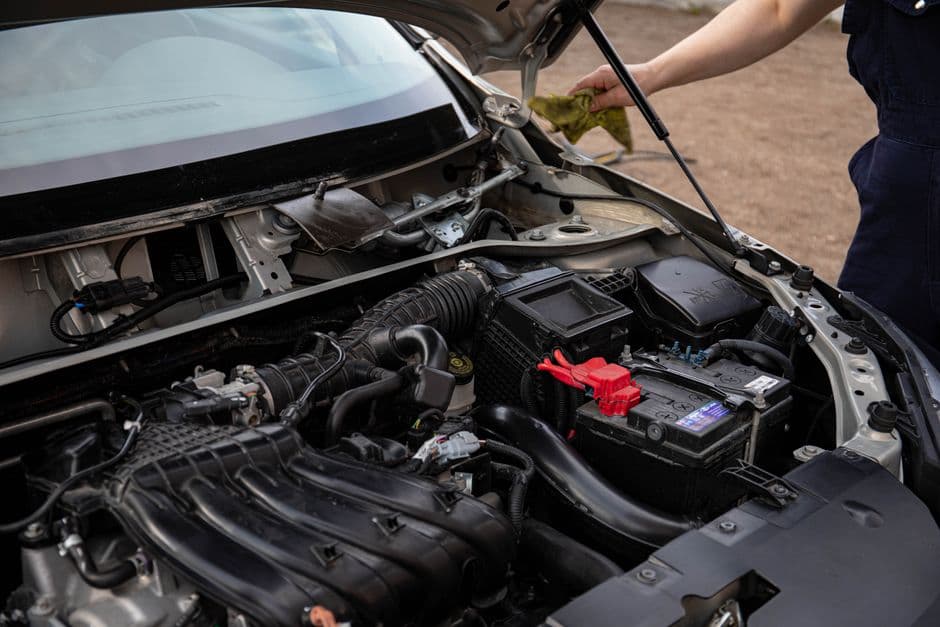
Why your battery died, and how to stop the repeat
A jump-start fixes the symptom, not the cause. The usual suspects are simple: headlights or a dome light left on overnight, a battery that's just old (most give up between three and five years), a string of short trips that never let the alternator fully recharge it, a parasitic drain from something staying awake with the key out, and cold weather that saps cranking power right when you need it. If your car needs a jump twice in a month, the battery or charging system is asking to be tested, not jumped again.
Staying ahead of it is mostly about knowing the battery's age and catching the warning signs early, which is the whole point of a little routine battery maintenance. If you want a second opinion on technique, AAA's jump-start guide and Consumer Reports both walk through the same safety steps in detail.
Log the dead battery so the next one isn't a surprise
The single best defense against a repeat jump-start is knowing how old your battery is, and almost nobody remembers the date they bought one. Write it down the day it goes in, with the mileage, and a three-to-five-year battery stops being a mystery: you can see the replacement coming instead of discovering it in a cold parking lot.
That's exactly what logging maintenance in Wheelscribe is for: one entry with the date and mileage, and your battery's clock starts ticking where you can see it. The free plan covers one car with unlimited entries, which is plenty to keep a battery, an alternator, and every other little fix on the record.
Frequently asked questions
Do you connect the red or black cable first?
Red first, on the dead battery, then the other red to the good battery, then black to the good battery, and finally black to bare engine metal on the dead car. Connecting both positives before either negative keeps a loose clamp from sparking against metal.
Why does the last clamp go on the engine, not the battery?
A charging battery can release a small amount of hydrogen gas, and that final connection often throws a tiny spark. Clamping it to unpainted engine metal a short distance from the battery keeps the spark away from any gas, which is the whole reason for the order.
How long should you run the car after a jump-start?
Keep it running and drive for at least twenty to thirty minutes so the alternator can recharge the battery. A short trip straight to a parking spot often leaves the battery too low to start again, so give it a real drive if you can.
Can you jump-start a car by yourself without another car?
Yes, with a portable jump-start pack. You clamp its red lead to the positive post and black to bare engine metal, switch it on, and start the car, no second vehicle needed. It's the same safety order as cables, just with the pack playing the donor.
Why won't my car start even after a jump, just clicks?
A single click with no crank usually means a very low battery or a failing starter, while total silence points to a clamp not making contact. Wiggle the clamps and let the donor run a few minutes; if it still won't catch, the starter, alternator, or battery may need testing.
Can jump-starting a car damage the electronics?
Done in the correct order with the ignitions off, jump-starting is safe for modern electronics. Damage usually comes from reversing the cables or clamping positive to negative, so double-check red-to-positive on both cars before you connect the donor's negative.
Start logging your car's history
One car, unlimited entries, free forever. See pricing for what Pro adds.
Create free account