
Motorcycle Maintenance: What Actually Matters
A motorcycle maintenance guide covering the schedule, chain, tires, and battery, plus a way to keep records that outlast the bike.
What motorcycle maintenance actually comes down to
Motorcycle maintenance comes down to five recurring jobs: chain, tires, oil, brakes, and battery. Stay on top of those and the bike will outlast your interest in it. Everything else, valve checks, coolant, fork oil, happens rarely enough that the manual's intervals are all you need. The catch is that a bike punishes neglect faster than a car does. A car with a dry chain doesn't exist; a motorcycle with one is chewing through a $150 chain and sprocket set at highway speed.
None of it is hard. Most of these jobs need twenty minutes, a rear stand, and maybe a torque wrench. What actually kills bikes isn't hard riding, it's sitting: fuel going stale, batteries draining flat, tires cracking in place. If your bike lives more in the garage than on the road, the maintenance below matters more for you, not less.
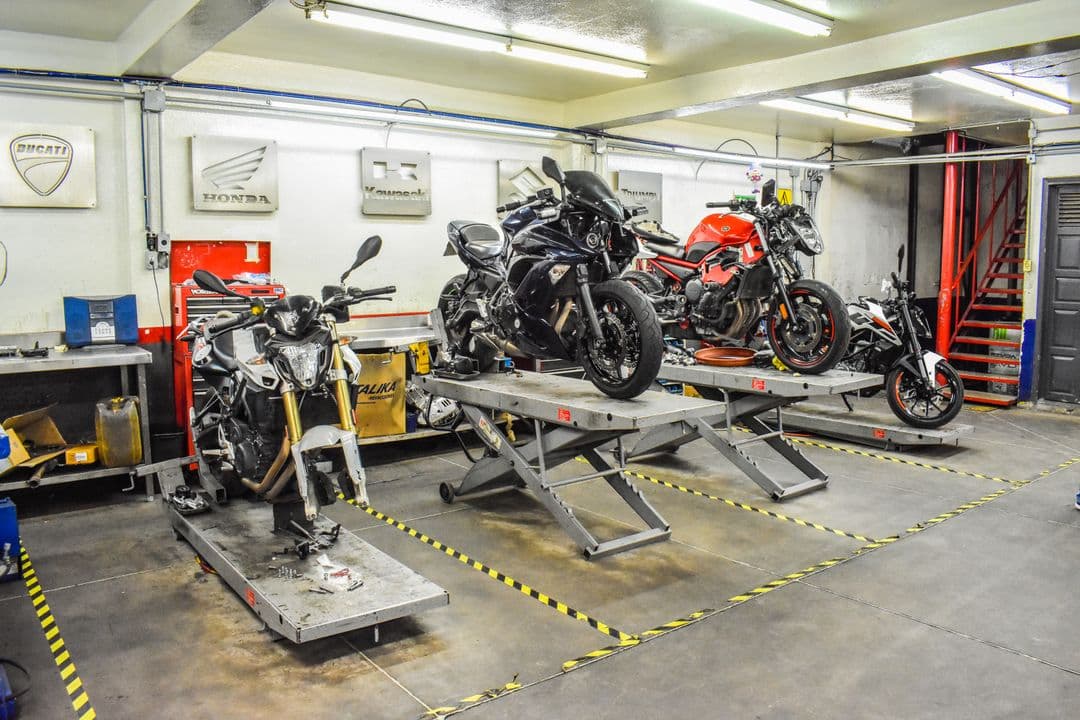
A motorcycle maintenance schedule that maps to real riding
A workable motorcycle maintenance schedule: chain clean and lube every 500 miles, tire pressures every week you ride, oil and filter every 3,000 to 5,000 miles or once a season, brake fluid every two years, coolant every two to three, and the valve check whenever your manual says, typically 15,000 to 26,000 miles depending on the engine. Your owner's manual outranks this list. A Harley twin, a Honda inline four, and a KTM single have genuinely different needs, and the manual is the one document written for your exact engine.
Mileage intervals mislead low-mileage riders, and most riders are low-mileage. If you ride 2,000 miles a year, you'll hit the time-based limits first: oil degrades sitting in the crankcase, brake fluid absorbs moisture whether you ride or not. When an interval says “6,000 miles or 12 months,” the “or” is doing real work.
Chain maintenance is the one you can't skip
Motorcycle chain maintenance is a 500-mile habit: clean with kerosene or a dedicated chain cleaner, dry, then lube while the chain is warm, aiming the spray at the inside run so it works outward as the chain spins. Do it sooner after rain. Check slack at the same time, usually 25 to 35 millimeters of vertical play at the middle of the bottom run, with the exact number and measuring point in your manual. Too tight is worse than too loose; an over-tensioned chain loads the countershaft bearing and can take out an output seal.
A cared-for O-ring chain lasts 20,000 miles or more. A neglected one can be done in 8,000, and it takes the sprockets with it, turning a $15 can of lube into a $150 parts order plus an afternoon of work. This is the best effort-to-savings ratio on the entire bike.
Motorcycle tire maintenance: pressure weekly, tread monthly
Check pressures cold, every week you ride. That's the whole trick. Motorcycle tires run small volumes at high pressure, so a few PSI matters far more than in a car: a bike that suddenly feels vague or heavy steering into corners is often just down 5 PSI. Use the figure on the swingarm sticker or in the manual, not the max number printed on the sidewall. While you're there, glance at the tread for nails, cupping, and squared-off centers from highway miles.
Age matters as much as tread depth. Rubber hardens and loses grip after five or six years even with legal tread remaining, and NHTSA's motorcycle safety data makes an uncomfortable case for not gambling on your only two contact patches. The four-digit DOT date code on the sidewall tells you the week and year the tire was made.
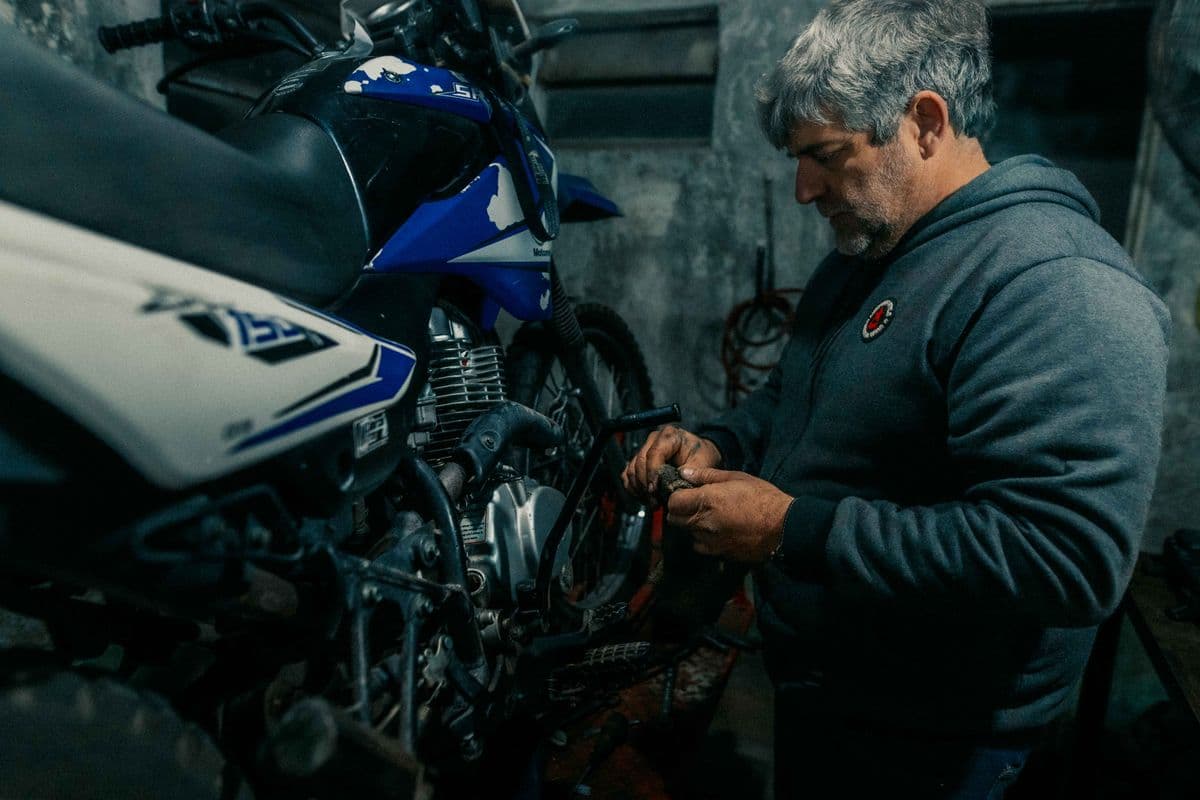
Battery care for a bike that sits
Put the battery on a smart tender whenever the bike parks for more than two weeks. That one habit doubles battery life. Motorcycle batteries are small, and modern bikes draw a constant trickle for the clock, alarm, and ECU, so a healthy battery can go too flat to start in three or four weeks of sitting. Deep discharges permanently cost capacity, which is why so many riders buy a new battery every spring. A $40 tender ends that cycle.
Twice a year, check that the terminals are tight and clean; on bikes they work loose from vibration more than they corrode. The chemistry and voltage numbers are the same story as in a car, and the car battery guide covers testing and charging in more depth. The short version: resting voltage below 12.4 means charge it now, not eventually.
Write down every job, or repeat every job
A motorcycle maintenance log is what turns all of the above from guesswork into a schedule. Nobody remembers whether the brake fluid was flushed last spring or the spring before, and fluid doesn't look different either way. Log the date, mileage, work done, cost, and parts used, chain brand and pitch included, every time you touch the bike. The Motorcycle Safety Foundation pushes pre-ride inspections for the same reason: what gets checked on a schedule gets caught early.
A notebook under the seat works until it's lost or soaked. A spreadsheet holds up better, but attaching receipts and searching old entries gets clumsy fast. Wheelscribe tracks any vehicle with an odometer, bikes included: dated entries with mileage, cost, parts, and receipt photos, and the free plan covers one vehicle with unlimited entries.
Frequently asked questions
How often should a motorcycle be serviced?
Minor service (oil, filter, inspection) every 3,000 to 5,000 miles or once a year, whichever comes first. Major service with a valve check typically lands between 15,000 and 26,000 miles depending on the engine. Your owner's manual has the exact intervals for your bike.
How often should I clean and lube my motorcycle chain?
Every 500 miles is the standard habit, sooner if you've ridden in rain. Lube a warm chain and aim at the inside run. Check slack at the same time, since a chain that's too tight wears faster than one slightly loose.
Can I do motorcycle maintenance myself?
Most of it, yes. Chain care, tire pressures, oil changes, and battery upkeep need basic tools, a rear stand, and the manual. Valve adjustments and tire mounting are the usual jobs worth paying a shop for, unless you enjoy buying specialty tools.
What maintenance does a motorcycle need if it mostly sits?
Sitting is harder on a bike than riding. Keep the battery on a smart tender, add fuel stabilizer if it parks for more than a month, and check tire pressure and condition before every ride. Change the oil by time, not mileage: once a year even at low miles.
How much does motorcycle maintenance cost per year?
Doing your own basic work, expect $100 to $250 a year in oil, filters, and chain supplies for an average bike. Shop-serviced, routine years run $200 to $500, with valve-check years higher. Keeping a log of actual costs beats every online estimate.
Start logging your car's history
One car, unlimited entries, free forever. See pricing for what Pro adds.
Create free account