
Timing Belt Replacement: When and Why
How often to replace a timing belt, the warning signs it's wearing out, and why the job is worth logging on an interference engine.
How often to replace a timing belt
Most manufacturers put the timing belt replacement interval somewhere between 60,000 and 105,000 miles, though a handful of older or higher-strung engines call for it as early as 30,000 and a few go as far as 120,000. Mileage is only half the equation. Rubber degrades with age even on a car that barely gets driven, so most owner's manuals also list a time limit, typically five to seven years, whichever comes first.
Your specific number lives in the maintenance schedule section of your owner's manual, not on a sticker under the hood the way an oil change interval sometimes is. If you bought the car used and don't have the manual, the dealer's service department or a quick search of your exact year, make, and model will get you the real figure faster than guessing from a general rule.
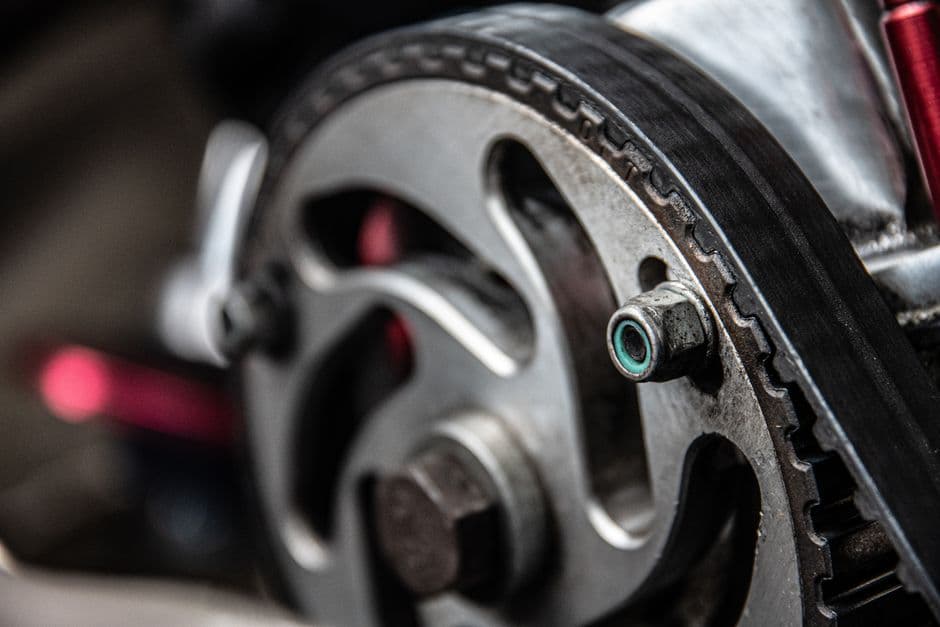
Timing belt vs. timing chain: what your car actually has
Not every engine has a rubber timing belt at all. Plenty of modern engines use a metal timing chain instead, which is designed to last the life of the engine and isn't on a fixed replacement schedule the way a belt is. Pop the hood and look, or check your manual: a belt is a wide, ribbed rubber band, while a chain looks like a small bicycle chain and usually runs in oil at the front of the engine.
Chains aren't maintenance-free forever. They can stretch and the tensioner that keeps them taut can wear out, usually well past 100,000 miles, and the symptom is usually a rattling noise on cold startup. But if your car has a chain, you can skip the rest of this article's mileage math. It only applies to belts.
Warning signs your timing belt is wearing out
A healthy timing belt gives almost no warning before it fails, which is exactly why the interval matters more than the symptoms. Still, a few things are worth paying attention to: a ticking noise from the front of the engine, visible cracking or fraying when you can actually see the belt, oil residue on the belt from a nearby seal leak, or the engine suddenly running rough because the valve timing has slipped slightly.
None of those signs are reliable enough to bet on. A belt that looks fine on Tuesday can snap on Wednesday. Treat the mileage and age interval as the real deadline, and treat any of these symptoms as a reason to move that deadline up, not a reason to wait for a second opinion.
Why the water pump usually gets replaced at the same time
On a lot of engines, the water pump is driven by the same timing belt and sits right behind it, which means most of the labor to reach one is the labor to reach the other. Shops routinely recommend replacing the water pump during a timing belt job even if it's not leaking yet, because doing it later means paying for that same teardown labor twice.
It also lowers the odds of a comeback. A water pump that fails a year after a fresh belt job means pulling everything back apart, and a pump seizing can occasionally take the belt down with it. Ask your shop directly whether your engine shares a belt with the water pump before you approve the job, since it changes the total cost.
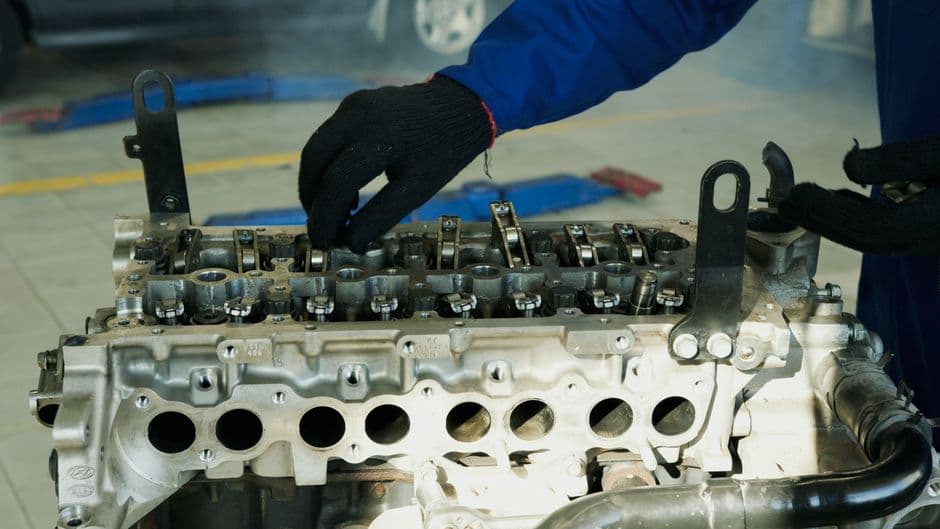
What happens when a timing belt actually breaks
The outcome depends entirely on whether your engine is an interference engine, meaning the pistons and valves occupy the same space at different points in the rotation. On a non-interference engine, a snapped belt just leaves you stranded: the engine stops, no damage done, tow it in and replace the belt. On an interference engine, the pistons and valves collide the instant the belt lets go.
That collision usually means bent valves at minimum, and often a cracked piston or damaged cylinder head on top of it, the kind of repair that can cost more than the belt job would have a hundred times over. Most modern high-compression four-cylinder and V6 engines from Honda, Toyota, Volkswagen, Audi, and Subaru fall into this category, which is the real reason the interval isn't a suggestion.
Log the replacement, it matters more than people think
A timing belt job is exactly the kind of maintenance that's easy to forget you did and expensive to redo unnecessarily. Six years and one car sale later, neither you nor a buyer wants to guess whether it was ever done. Recording the date, mileage, shop or parts used, and whether the water pump went with it turns a fuzzy memory into something you can actually point to.
Wheelscribe's entry form keeps that mileage and parts detail attached to the job itself, and if you're building out the rest of your service intervals alongside it, our car maintenance checklist covers the other big-ticket items worth tracking the same way. The fueleconomy.gov maintenance guide is a reasonable second opinion if your manual is missing or you bought the car without one. It's free to start logging, so there's no reason to wait until the next big job to begin.
Frequently asked questions
How often should a timing belt be replaced?
Most manufacturers call for 60,000 to 105,000 miles, or five to seven years, whichever comes first. Some engines have shorter or longer intervals, so check your owner's manual for the exact figure rather than relying on a general rule.
How do I know if my car has a timing belt or a timing chain?
Check your owner's manual or look under the hood: a belt is a wide, ribbed rubber band, while a chain resembles a small bicycle chain and runs in oil. Chains don't follow a fixed mileage replacement schedule the way belts do.
What happens if a timing belt breaks while driving?
On a non-interference engine, the car simply stops with no lasting damage. On an interference engine, the pistons and valves collide the instant the belt lets go, which usually means bent valves and sometimes a cracked piston or damaged cylinder head.
Should I replace the water pump with the timing belt?
If your engine's water pump is driven by the timing belt, yes. Most of the labor to reach the belt is the labor to reach the pump, so replacing both at once avoids paying for the same teardown twice if the pump fails later.
Are there warning signs before a timing belt fails?
Sometimes: a ticking noise, visible cracking, oil residue on the belt, or rough running from slipped valve timing. None of these are reliable, though. A belt can look fine and still fail without warning, so the mileage and age interval matters more than symptoms.
Why should I log a timing belt replacement?
It's an expensive job that's easy to forget you already did, and buyers care whether it's been done on an interference engine. Recording the date, mileage, and whether the water pump was replaced at the same time saves guesswork later, including at resale.
Start logging your car's history
One car, unlimited entries, free forever. See pricing for what Pro adds.
Create free account