
Car Maintenance Tools You Actually Need
The car maintenance tools worth buying first for DIY oil and brake jobs, what each one costs, and the few places where a cheap tool will burn you.
The starter set of car maintenance tools
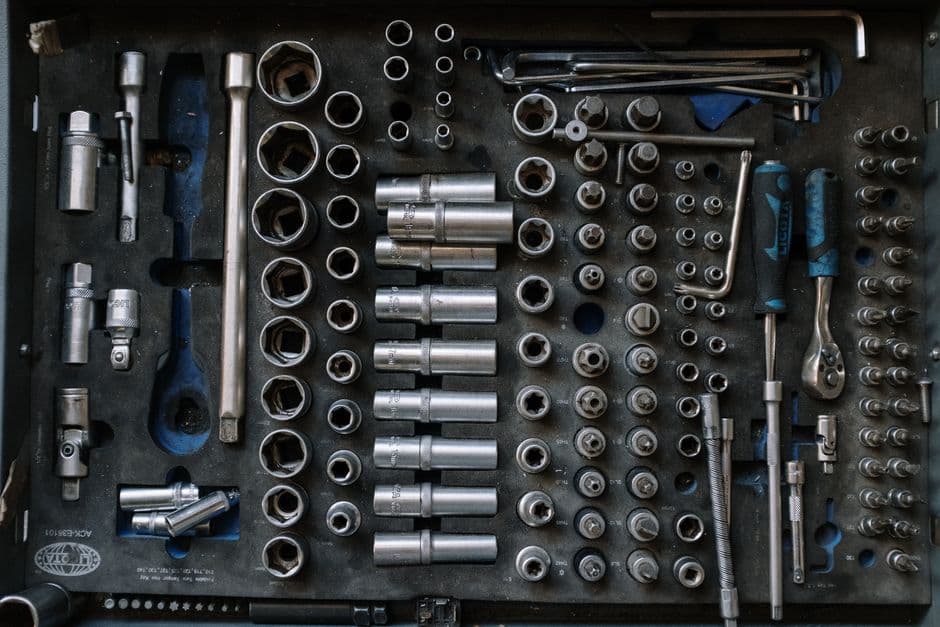
You can do oil changes, filters, brakes, and battery work with about $250 of car maintenance tools: a 3/8 inch drive socket set, a click-type torque wrench, a trolley jack, a pair of jack stands, wheel chocks, a drain pan, an oil filter wrench, a funnel, nitrile gloves, and a cheap Bluetooth OBD2 reader. That list covers most of what a car asks for in its first decade.
Buy tools as the jobs come up rather than filling a cabinet in one go. The first oil change pays for the drain pan and filter wrench, the first brake job pays for the caliper piston tool, and by the third or fourth job you own most of what you need without having guessed.
Lifting gear is where cheap tools bite
The jack that came with your car is for changing a flat on the roadside, not for working under the vehicle. Get a low profile trolley jack rated well above your car's weight, and a pair of jack stands rated the same. Every time the car goes up, the stands go under a proper lift point, the wheels get chocked, and the ground is flat and hard. Gravel driveways sink stands.
Ramps are the easier option for oil changes since the wheels stay on, though they are useless for brake work. Whichever you use, give the car a firm shove before you slide underneath. If it rocks on the stands, it is not ready. This is the one category where saving $40 is a genuinely bad trade.
A torque wrench, and knowing when to use it
A click-type torque wrench covering roughly 10 to 150 ft-lb handles almost everything a home mechanic touches: wheel nuts, caliper brackets, drain plugs, spark plugs. Guessing on wheel nuts warps rotors when you go too tight and loses wheels when you go too loose, so this is not a tool to skip. Expect to spend $50 to $120 for one worth trusting.
Wind the setting back to its lowest mark after each use so the spring relaxes, and keep the wrench off the impact gun duty it was never designed for. Torque values live in the service manual for your specific car, and tire pressure targets are on the door jamb sticker rather than the tire sidewall, a distinction NHTSA's tire guidance spells out clearly.
Diagnostic tools that earn their keep
A $25 Bluetooth OBD2 dongle plus a phone app reads and clears check engine codes, shows live sensor data, and tells you whether the light is a loose fuel cap or something that needs a shop. It pays for itself the first time it saves a diagnostic fee. Keep it unplugged when the car is parked for weeks, since some dongles draw a small current.
Two more worth owning: a decent digital tire pressure gauge, because the pencil ones drift and the ones at gas stations lead a hard life, and a multimeter for checking battery voltage and charging output. Twelve volts at rest and around fourteen with the engine running is the quick sanity check described in our battery maintenance guide.
Consumables and the stuff nobody lists
Beyond the tools themselves, keep a shelf of the supplies that turn a two hour job into a one hour job: nitrile gloves, shop towels, brake cleaner, penetrating oil, a wire brush, zip ties, and a magnetic parts tray so bolts stop disappearing under the car. None of it is exciting and all of it gets used.
Add a headlamp and a creeper or a scrap of cardboard once you start spending time underneath. Working in good light with your back off cold concrete is the difference between finishing a job and abandoning it halfway. Everything here fits in one plastic tote, which matters if your garage is also where the bikes live.
Tools pay off faster when you log the work
A $60 filter wrench and a $90 torque wrench look expensive until you count the shop visits they replace. Recording what each DIY job cost in parts, against what the same work quotes at, is how you find out whether the toolbox is actually earning. Our breakdown of typical car maintenance costs gives you the comparison numbers, and the beginner maintenance guide covers which jobs to start with.
Log the date, mileage, parts, and cost each time you use the tools. Wheelscribe keeps that per car with photos and receipts attached, so the record survives longer than your memory of which oil filter fits.
Frequently asked questions
What tools do I need for basic car maintenance?
A 3/8 inch socket set, torque wrench, trolley jack, jack stands, wheel chocks, drain pan, oil filter wrench, funnel, gloves, and an OBD2 reader. That covers oil changes, filters, brakes, and battery work on most cars for around $250.
Is a torque wrench really necessary?
Yes, especially for wheel nuts and caliper bolts. Overtightening warps brake rotors and stretches studs, while undertightening can let a wheel work loose. A click-type wrench covering 10 to 150 ft-lb costs $50 to $120 and handles nearly every home job.
Are cheap car maintenance tools worth buying?
For sockets, wrenches, and pliers, budget brands are fine for occasional use. For anything that holds a car up or measures torque, buy quality. Lifting gear and torque wrenches are the two places where a cheap tool causes real damage or injury.
Do I need an OBD2 scanner at home?
A $25 Bluetooth dongle paired with a phone app is enough for most owners. It reads and clears check engine codes and shows live data, which tells you whether a warning light needs a shop visit or just a tightened fuel cap.
Can I use the jack that came with my car?
Only for roadside wheel changes. The scissor jack in the trunk is not stable enough to work under, so use a trolley jack to lift and jack stands rated above your car's weight to hold it, on flat, hard ground with the wheels chocked.
Start logging your car's history
One car, unlimited entries, free forever. See pricing for what Pro adds.
Create free account