
CV Axle & Driveshaft Maintenance Guide
How to catch CV axle and driveshaft problems early: what a clicking noise when turning means, how to inspect a boot, and when to replace one.
What the CV axle and driveshaft actually do
CV axle maintenance rarely gets attention until something clicks, and by then the part is usually already failing. On a front-wheel-drive car, the CV axle carries power from the transmission to each wheel through a joint flexible enough to handle steering angle and suspension travel at the same time. Rear-wheel and four-wheel-drive vehicles use a driveshaft with U-joints instead, doing a similar job in a straighter line from the transmission back to the axle.
Both designs share the same weak point: a rubber boot packed with grease, sealing out dirt and water. That boot is cheap and easy to replace. The joint underneath it is not, which is why a five-minute visual check during any other service under the car is one of the highest-value habits in this whole guide.
The clicking noise that means a CV joint is failing
A clicking or popping noise when turning, especially sharp turns like a parking lot maneuver, is the classic sign of a worn outer CV joint. If the noise only shows up turning one direction, the outer joint on that side is usually the one going bad. If it happens turning both ways, both outer joints may need attention.
A clunk on acceleration or deceleration points more toward an inner joint or a worn axle shaft. Left unaddressed, a failing CV joint eventually seizes or separates, which can mean a sudden loss of drive to that wheel. It's not usually an emergency the first week you notice the sound, but it's not a noise worth ignoring for months either.
How to inspect a CV boot yourself
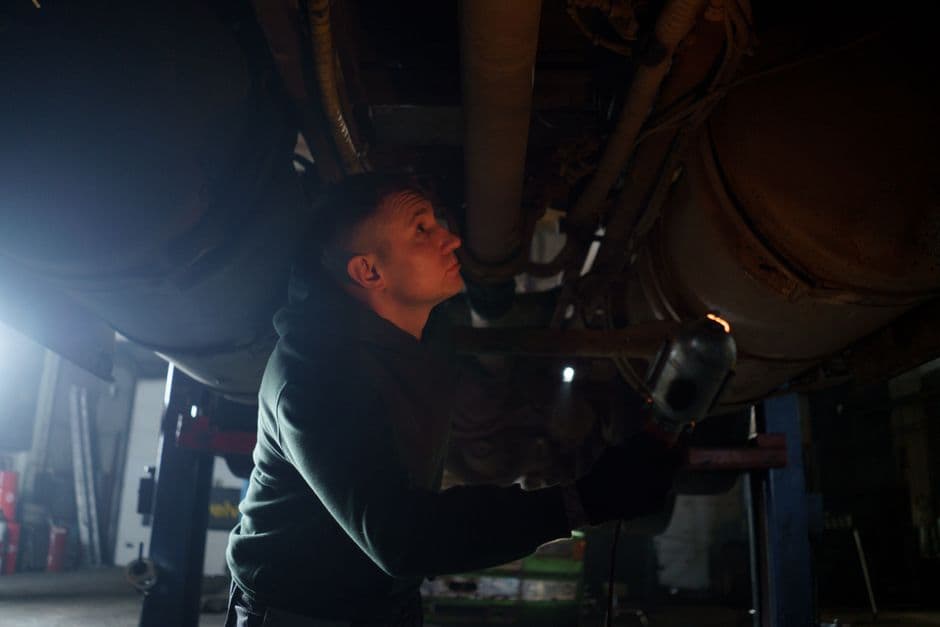
With the car safely on jack stands, find the accordion-folded rubber boot near where the axle meets the wheel hub. A healthy boot is smooth and pliable, with no cracks, tears, or grease flung onto nearby suspension parts. Give it a squeeze; it should feel supple, not stiff or brittle.
A torn boot lets grease escape and dirt in, and even a small split accelerates wear fast once contaminants reach the joint. If you see dark grease splatter on the inside of the wheel or a torn accordion fold, that axle needs attention soon, not at the next scheduled service. Check both sides on every oil change; it's the same underbody visit either way.
Driveshaft and U-joint care on rear-wheel and 4WD vehicles
Rear-wheel-drive and four-wheel-drive vehicles swap the CV axle setup for a driveshaft connected through U-joints, and some of those U-joints have grease fittings that need periodic lubrication rather than a one-time factory fill. Check your owner's manual for a grease interval, since skipping it on a fitted U-joint is one of the more common causes of premature driveline failure on trucks and 4WD SUVs.
A worn U-joint typically announces itself with a clunk shifting between drive and reverse, or a vibration that gets worse with speed. Both are worth logging the first time you notice them, since a driveline vibration that starts subtle tends to get worse quickly once a U-joint starts to fail.
Boot replacement versus full axle replacement
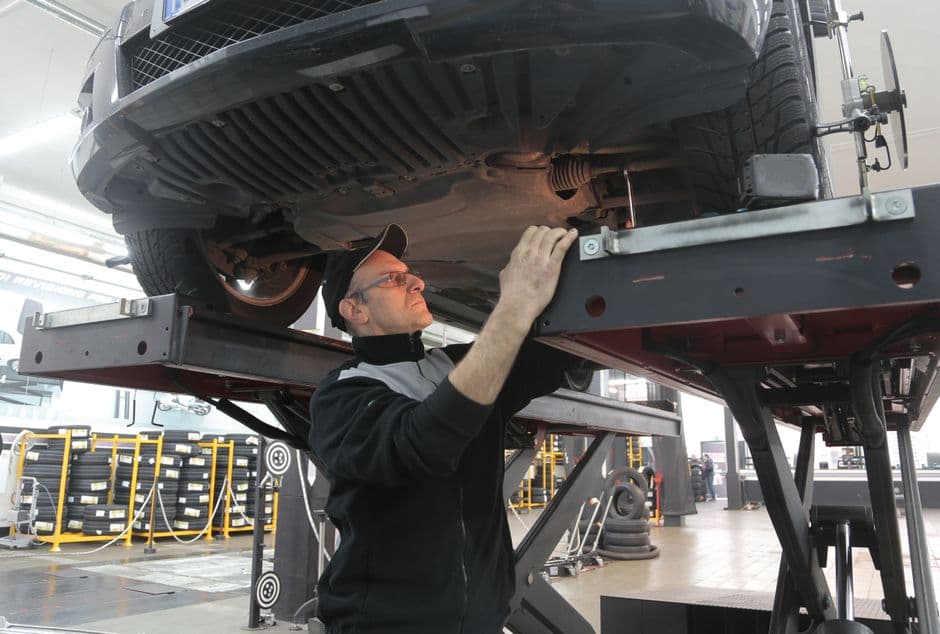
Catch a torn boot early, before dirt and water have had time to work into the joint, and a boot replacement alone can save the axle. Once the joint itself shows play, grinding, or visible wear when you move it by hand, a boot alone won't fix the underlying problem, and a full axle replacement with an OEM-quality part is the more reliable repair.
This is exactly the kind of judgment call that's easier with a maintenance record in hand. Knowing a boot was replaced eighteen months ago versus never inspected at all changes whether a new clicking noise means a quick fix or a bigger job.
How often to check CV axles and driveshafts
A visual boot check at every oil change is enough for most drivers, tightening to every service if you regularly drive on rough roads, gravel, or deep snow, all of which accelerate boot wear. The Consumer Reports car maintenance guide and the Car Care Council's maintenance guide both fold undercarriage checks like this into a routine service visit rather than treating them as a separate appointment, which is the easiest way to keep up with them.
Our car maintenance checklist includes underbody checks like this alongside the more familiar oil and filter items, so nothing under the car gets skipped just because it's less visible than a dash warning light.
Logging driveline work so patterns show up early
A single clicking noise is easy to dismiss. A logged pattern, boot flagged as slightly stiff six months ago, now visibly cracked, is what turns a vague feeling into a clear decision to fix it now instead of waiting for a joint failure on the highway. The same logic applies to related wear items like suspension bushings and ball joints, which fail on a similar timeline.
Wheelscribe's entry log keeps notes like “boot slightly stiff, watch next service” tied to the exact mileage they were spotted, so the next inspection has something to compare against. It's free to start with one car.
Frequently asked questions
What does a clicking noise when turning usually mean?
A clicking or popping sound when turning, especially in sharp turns, is the classic symptom of a worn outer CV joint. If it happens turning one direction only, the outer joint on that side is typically the culprit; noise in both directions suggests both outer joints need inspection.
How do I inspect a CV boot without taking it apart?
With the car safely supported on jack stands, look at the rubber accordion-folded boot near the wheel hub. A healthy boot is smooth and flexible with no cracks or tears. Dark grease splatter on the inside of the wheel or a visibly split boot means it needs replacement soon.
Can I just replace the CV boot instead of the whole axle?
Yes, if you catch the tear early before dirt and water have contaminated the joint. Once the joint itself shows play or grinding when moved by hand, a boot-only fix won't solve the underlying wear, and a full axle replacement is the more reliable repair.
Do all vehicles have CV axles?
Front-wheel-drive vehicles use CV axles on the front wheels. Rear-wheel-drive and four-wheel-drive vehicles typically use a driveshaft with U-joints instead, which does a similar job but has different maintenance needs, including periodic greasing on U-joints with a zerk fitting.
How often should I check my CV axles and driveshaft?
A quick visual boot check at every oil change is enough for most drivers. Tighten that to every service if you regularly drive on rough or unpaved roads, which accelerates boot wear and increases the chance of contamination reaching the joint.
What causes a driveshaft vibration that gets worse with speed?
A speed-related vibration often points to a worn U-joint, a bent driveshaft, or a failing center support bearing on longer driveshafts. It's worth logging the first time it appears and having it inspected, since driveline vibrations tend to worsen quickly once a component starts to fail.
Start logging your car's history
One car, unlimited entries, free forever. See pricing for what Pro adds.
Create free account