
Lift Kit and Off-Road Suspension Mods
A lift kit and off-road suspension modifications guide covering body vs suspension lifts, driveline angle and alignment issues, and choosing the right lift height.
What a lift kit actually changes on a truck or Jeep
A lift kit and off-road suspension modifications, done properly, raise the truck for bigger tires and more ground clearance, but they also change nearly everything the factory tuned together as a system: ride height, suspension travel, driveline angles, steering geometry, and how the brakes and ABS behave with a different wheel and tire combo. A two-inch leveling kit barely touches most of that. A six-inch suspension lift touches all of it.
None of that means a lift is a bad idea, plenty of trucks run them reliably for years, it just means the install is the start of the maintenance, not the end of it. A lifted truck needs more attention to suspension and steering components than a stock one, not less.
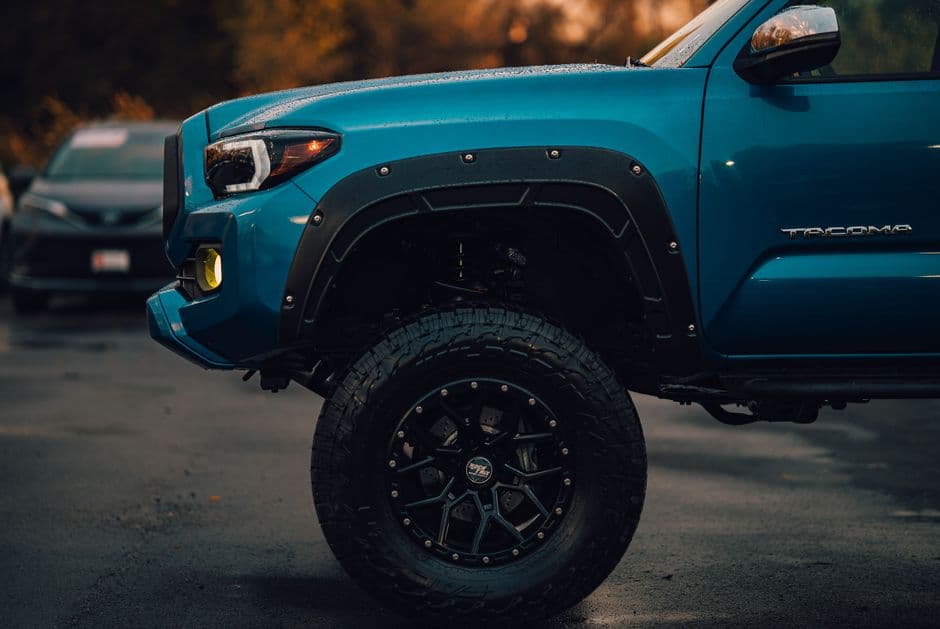
Body lift vs suspension lift vs leveling kit
A body lift is the simplest of the three: it raises the body off the frame with spacer blocks, leaving the suspension itself untouched. It clears room for bigger tires without changing how the truck rides or handles, but it also doesn't add any real ground clearance under the axles, since the frame stays exactly where it was.
A suspension lift replaces springs, shocks, and sometimes control arms to raise the whole vehicle, frame included, which is what actually improves off-road clearance and wheel travel. A leveling kit is a smaller version of the same idea, aimed only at matching the front ride height to the rear on trucks that sit lower in front from the factory.
What to check immediately after installing a lift
Per Rough Country's lift kit prep guide, worn factory suspension and steering components should get inspected before the install, not after, since anything already tired will fail faster once it's carrying more leverage. An alignment is not optional afterward: ride height changes camber and caster enough that skipping it leads to uneven tire wear and vague steering almost immediately.
Torque every bolt to spec and recheck them after the first couple hundred miles, since new suspension hardware tends to settle. Bigger tires also change the load on wheel bearings and brakes, so it's worth a close look at both a few weeks in.

The driveline angle and alignment problem
Raising a truck changes the angle of the driveshaft between the transmission or transfer case and the axle, and beyond a certain lift height that angle starts causing a vibration through the floor or steering wheel, especially at highway speed. It's the universal joints working at a sharper bend than they were designed for, and it gets worse, not better, if it's ignored.
Driveline spacers, adjustable control arms, or a shop-set driveshaft angle are the usual fixes, and they're a normal part of a taller lift, not a sign something was installed wrong. It's worth budgeting for before you commit to a lift height rather than treating it as a surprise repair afterward.
Choosing lift height for how you actually use the truck
Per RealTruck's lift kit buying guide, picking a tire size first and matching the lift to it, rather than picking a lift height and hoping the tires fit, avoids a lot of the rubbing and clearance problems people run into. A 2 to 3 inch lift is usually enough for a modest tire upgrade and stays easy to live with daily, while anything past 4 to 6 inches starts trading drivability and fuel economy for trail capability.
A daily driver that occasionally sees a dirt road wants a very different setup than a dedicated trail rig, and being honest about which one you're building saves money on parts you'll never actually use.
Document the build
A lift kit is exactly the kind of modification worth documenting as you go: part numbers, torque specs, alignment settings, and the shop or driveway session where you installed it. It's the same record a future buyer will want to see, since a well-documented lift reads very differently from an unknown one with mismatched parts.
If you're also chasing on-road suspension upgrades on another car, Wheelscribe keeps both builds separate but organized. Built for exactly this kind of project, and free to start.
Frequently asked questions
What's the difference between a body lift and a suspension lift?
A body lift raises the body off the frame with spacer blocks and doesn't touch the suspension, clearing tire room without changing ride or handling. A suspension lift replaces springs and shocks to raise the whole vehicle, frame included, which is what actually adds ground clearance and wheel travel.
Do I need an alignment after installing a lift kit?
Yes, immediately. Changing ride height shifts camber and caster enough that skipping the alignment leads to uneven tire wear and vague steering almost right away.
Why does my truck vibrate after a lift kit install?
It's usually driveline angle. Raising the truck changes the angle between the transmission or transfer case and the axle, putting the universal joints at a sharper bend than they were designed for. Driveline spacers or an adjustable control arm setup are the usual fix.
How much lift do I need for bigger tires?
It depends on the tire size, not a fixed rule. A 2 to 3 inch lift usually covers a modest tire upgrade and stays easy to live with daily, while anything past 4 to 6 inches trades drivability and fuel economy for more trail capability.
What should I check after driving a lifted truck for a few hundred miles?
Recheck all suspension hardware torque, since new components tend to settle after the first stretch of driving. It's also worth inspecting wheel bearings and brakes, since bigger tires change the load on both.
Start logging your car's history
One car, unlimited entries, free forever. See pricing for what Pro adds.
Create free account