
Motorcycle Chain Maintenance & Tire Care
Motorcycle chain maintenance takes ten minutes every few hundred miles. How to clean, lube, and tension a chain, plus the tire and battery checks to match.
How often motorcycle chain maintenance is actually due
Clean and lube the chain every 300 to 600 miles, and always after riding in rain or on a dusty road. Check the slack at the same time. That is the entire routine, it takes about ten minutes, and skipping it is the fastest way to turn a part that should last 20,000 miles into one that lasts 8,000.
A neglected chain does not fail politely. It stretches unevenly, chews the sprockets into shark fins, and then takes both of them with it when you finally give in. Chains and sprockets get replaced as a set for exactly that reason, which makes ten minutes with a brush the cheapest maintenance on the bike. Our general motorcycle maintenance guide covers where the chain fits in the wider service schedule.
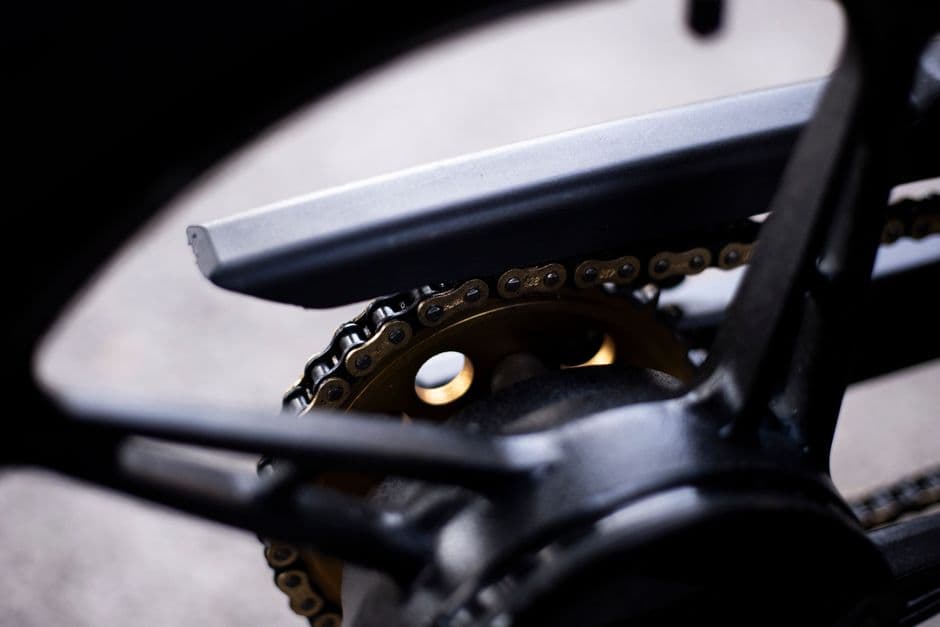
Cleaning without destroying the seals
Almost every modern chain is an O-ring or X-ring chain, which means there is grease sealed inside each link behind small rubber rings. Your job is to clean the outside without attacking those rings. Kerosene or a dedicated chain cleaner and a soft three sided brush will do it. Petrol, brake cleaner, and a wire brush will not, and once the seals go the factory grease leaves and never comes back.
Put the bike on a paddock stand or centre stand so the wheel spins freely, then work around the chain in sections rather than trying to do it all at once. If you are stuck with a side stand, roll the bike forward in stages. Wipe the chain dry before any lube goes near it, because lubricating a gritty chain is just packing the grit into the rollers.
Lubing it properly
Lube a warm chain, ideally right after a ride, and aim at the inside of the lower run where the rollers meet the side plates. Warm metal draws the lube in, and the inside of the run is where rotation carries it onto the sprockets rather than flinging it onto your rear wheel. Turn the wheel slowly and do a full lap.
Then leave it alone for a few minutes and wipe off what is still sitting on the surface. Excess lube does no work at all, it just collects dust and turns into grinding paste. If your bike wears a black stripe up the rear rim, you are using too much or applying it to the outside of the chain. Less, more often, beats a drenching once a season.
Slack, and knowing when the chain is finished
Check free play at the midpoint of the lower run and compare it to the figure in your manual, which is usually somewhere around 25 to 35mm. Rotate the wheel and measure at the tightest point, because chains wear unevenly. Too tight is far worse than slightly loose: a chain adjusted with no slack loads the output shaft bearing every time the suspension compresses.
For wear, pull the chain rearward off the back sprocket at the three o'clock position. If you can lift it far enough to see most of a tooth, it is done. Hooked or pointed sprocket teeth say the same thing. Replace the chain and both sprockets together, since a fresh chain on worn sprockets wears out at speed.
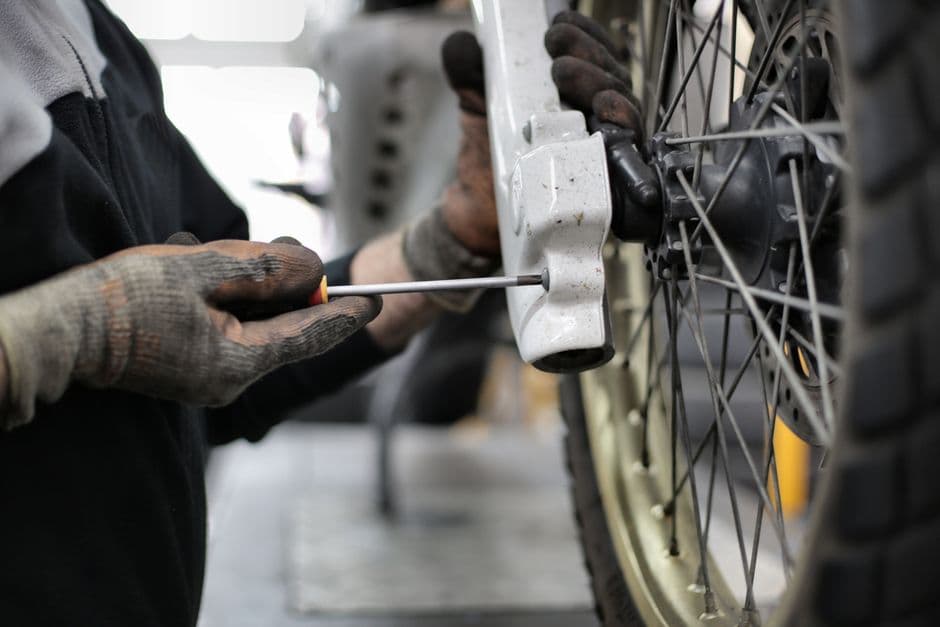
Motorcycle tire maintenance
Check pressures cold, every week, with your own gauge rather than the one chained to the air pump at the petrol station. A bike carries its entire contact patch on two palm sized areas, so a few psi matters more than it does on a car. Use the figure from the bike's manual or swingarm sticker, not the number moulded into the tire sidewall, which is a maximum rather than a recommendation.
Age matters as much as tread. The four digit DOT code on the sidewall gives the week and year of manufacture, and rubber hardens whether you ride it or not, which the NHTSA tire safety guidance explains in more detail. Watch for a squared off centre strip from motorway miles, since a flat centre gives vague steering long before the tread wear indicators appear.
Battery and cables between rides
Motorcycle batteries rarely die of hard use. They die of sitting, because a parked bike still draws a small current and a battery left flat for weeks sulphates permanently. A smart maintainer that charges and then stops is the fix, and it is worth more than any other winter storage ritual. A healthy lead acid battery rests around 12.6 volts or above.
While you are there, check clutch and throttle cable free play and give the cable ends a drop of oil. Seized cables come from neglect, not mileage. The same charging and testing logic applies on four wheels, which our car battery maintenance guide covers, and NHTSA's motorcycle safety pages are worth a read on the pre-ride check itself.
Write the numbers down, not just the task
“Lubed chain” is a note. “Cleaned and lubed at 14,300 miles, slack 30mm, no tight spots” is data. Log a few of those and you can see how quickly the chain is stretching, which tells you whether the next set is due this season or next year. Guessing gets expensive in exactly one direction.
The same goes for tire pressures, DOT dates, and battery voltage. Wheelscribe keeps that history per bike with photos attached, so a chain and sprocket replacement two years from now is a decision you make from your own numbers rather than from a forum thread about somebody else's bike.
Frequently asked questions
How often should I lube a motorcycle chain?
Every 300 to 600 miles for most riders, and always after riding in rain or heavy dust. Check your manual, since some manufacturers specify shorter intervals. Lubing a warm chain right after a ride works best because the metal draws the lubricant in.
Can I clean a motorcycle chain with brake cleaner?
No. Brake cleaner, petrol, and other harsh solvents attack the O-rings or X-rings that seal grease inside each link. Use kerosene or a chain-specific cleaner with a soft brush, then wipe the chain dry before applying lubricant.
How tight should a motorcycle chain be?
Follow the free play figure in your manual, commonly around 25 to 35mm at the midpoint of the lower run. Rotate the wheel and set it at the tightest spot. A chain adjusted too tight loads the output shaft bearing and is more damaging than one slightly loose.
How do I know when a motorcycle chain needs replacing?
Pull the chain rearward off the back sprocket at the three o'clock position. If it lifts far enough to expose most of a tooth, it is worn out. Hooked or pointed sprocket teeth confirm it. Replace the chain and both sprockets together.
When should motorcycle tires be replaced?
When tread reaches the wear indicators, when the centre strip squares off enough to make steering vague, or when age catches up. The four digit DOT code gives the week and year of manufacture, and rubber hardens with time even on a bike that barely gets ridden.
Why does my motorcycle battery keep dying over winter?
Because a parked bike still draws current and a battery left discharged sulphates permanently. A smart maintainer that charges and then switches off prevents it. A healthy lead acid battery should rest at about 12.6 volts or above.
Start logging your car's history
One car, unlimited entries, free forever. See pricing for what Pro adds.
Create free account