
Motorcycle Tire Maintenance and Replacement
Motorcycle tire maintenance: read tread wear on a round profile, set solo and two-up PSI, match front and rear tires, and time the break-in period.
What motorcycle tire maintenance actually covers
Motorcycle tire maintenance means three habits, done well: reading the tread correctly on a curved profile, running the right pressure for how the bike is loaded, and replacing tires as a matched front and rear pair before age or wear turn them into the weak link on your only two contact patches. A car has four tires to spread a mistake across. A bike has two, and it leans on them in corners, which is why the checks below go deeper than a quick glance and a tire gauge.
This guide sticks to tires specifically. For the chain, battery, and the wider service schedule, see our motorcycle maintenance guide and chain maintenance walkthrough. Everything here is the tire-specific detail those two only touch on.
Reading tread wear on a rounded tire profile
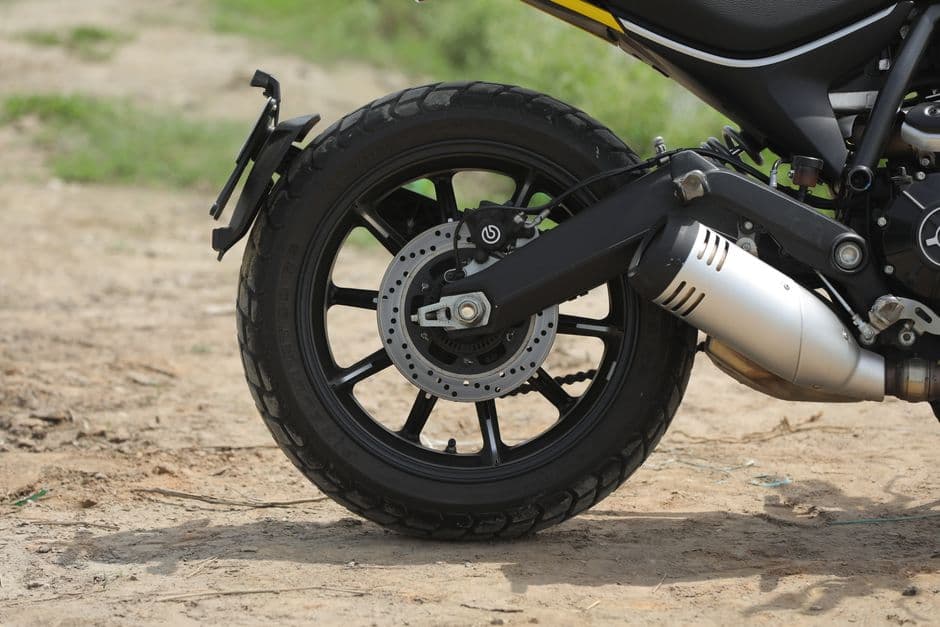
A motorcycle tire is round in cross-section, not flat like a car tire, so wear is never even across the face. Check three zones separately: the dead center (straight-line miles), the shoulders (cornering load), and the wear indicator bars molded into the grooves, usually marked with a small triangle or the letters TWI on the sidewall near the edge. Once the tread is flush with a bar anywhere on the tire, that tire is done, regardless of what the rest of the face looks like.
Watch for two shapes specifically. A squared-off center strip means too many highway miles at low lean angle, and it makes the bike feel heavy turning in. Untouched tread right at the edges, sometimes called chicken strips, just means you have not leaned the bike over that far, which is fine on the street and worth knowing before a track day. Cupping or scalloped wear around the circumference usually points to worn suspension or an out-of-balance wheel, not the tire itself.
Tire pressure: solo riding versus two-up
Check pressure cold, before the bike has moved, with your own gauge rather than the one bolted to a gas station air pump. Use the figures on the swingarm sticker or in the owner's manual, not the maximum number molded into the sidewall, which is a ceiling, not a recommendation. Most manuals list two sets of numbers for exactly this reason: one for a solo rider, and a second, usually 2 to 4 PSI higher in the rear, for two-up riding or a loaded rear rack.
The extra rear pressure compensates for the added weight compressing the sidewall, which otherwise builds heat and accelerates wear right down the center of the tread. If you regularly switch between riding solo and two-up, check pressure before each ride rather than assuming last week's number still holds. A bike that suddenly steers heavy or feels vague mid-corner is very often just a few PSI low, not a suspension problem.
Picking the right tire type for how you ride
Sport tires use a softer compound for maximum grip at speed and in corners, and they trade that grip for tread life, often 3,000 to 5,000 miles on a bike ridden hard. Touring tires go the other way: a harder, longer-wearing compound built for 8,000 to 12,000 highway miles, with less outright grip in a tight canyon. Dual-sport tires split the difference with a knobbier tread pattern rated for both pavement and gravel, usually described as an 80/20 or 50/50 street-to-dirt split depending on how far off-road you actually go.
Cruiser tires tend to run a taller sidewall and a higher load rating to suit heavier bikes, often on older bias-ply construction rather than radial. None of these are strictly better than another; they are trade-offs matched to a riding style. Buying a sport tire for a bike that mostly commutes just means paying more and replacing it sooner for grip you never use.
Matching front and rear tires: never mix tread patterns
Front and rear motorcycle tires are engineered as a pair, tuned to hand off grip and feedback to each other through a corner. Fitting a sport tire on the front and a touring tire on the rear, or mixing two different manufacturers' tread patterns, changes how the bike transitions from upright to leaned over, usually in a way you only notice once it's already sliding. Four mismatched tires on a car are just a suboptimal choice. Two mismatched tires on a bike change how the thing turns.
If only one tire is worn out, replacing just that one is fine, as long as the remaining tire matches size, load rating, and speed rating and still has plenty of life left. What to avoid is mismatched tread compounds or wildly different remaining tread depths front to rear, since that gap shows up exactly when you need both ends to behave the same way: mid corner, in the rain.

Breaking in a new tire over the first 100 miles
Every new motorcycle tire leaves the mold coated in a thin release compound that keeps it from sticking to the manufacturing mold. That coating is slick, more like a waxed floor than rubber, until it wears off, and it takes roughly the first 100 miles of riding to scrub away completely. Ride those first miles on a mix of surfaces at moderate, upright lean angles rather than pushing hard into corners right away.
The tire also needs those miles to seat fully on the rim and settle into its final shape, so a fresh tire that feels slightly different in the first ride or two is normal, not a defect. Save the aggressive lean angles for once the tire has a few tanks of fuel on it and the surface has a matte, scuffed look all the way to the edges rather than a shiny strip still sitting untouched.
Valve stems and the DOT date code
Give the valve stem a look every time you check pressure. A cracked rubber stem, one that leans at an odd angle, or a cap that will not seal are all signs it is due for replacement, and a valve stem is cheap enough that most shops swap it automatically with any new tire installation. It is also the single most common source of a slow leak that gets blamed on the tire itself.
The DOT code on the sidewall is four digits: the first two are the week of manufacture, the last two are the year, so 2224 means the 22nd week of 2024. Rubber hardens and loses grip with age even if a tire is barely ridden, which the NHTSA's tire safety guidance covers in more depth. Most manufacturers recommend replacing a motorcycle tire at five to six years from that date regardless of remaining tread, since two contact patches leave much less margin for hardened, cracking rubber than four does.
Log the numbers instead of guessing later
“New tires” is a note. “Michelin Road 6, front and rear, installed at 18,400 miles, DOT week 15 2026” is data you can act on two years from now when you are trying to remember whether that squared-off center strip means it is time already. The NHTSA's motorcycle safety resources make the same case for pre-ride tire checks: what gets checked on a schedule gets caught early, and what gets checked from memory gets missed.
Wheelscribe keeps that history per bike, tire brand and DOT code included, with receipt photos attached instead of buried in a text thread with your mechanic. See how the log works, compare it to tracking tires in a spreadsheet, or check the free plan if you just want one bike's history in one place.
Frequently asked questions
What PSI should motorcycle tires be?
Use the numbers on your swingarm sticker or in the owner's manual, checked cold, not the maximum figure molded into the sidewall. Most manuals list a separate, slightly higher rear pressure for two-up riding or a loaded rack, usually 2 to 4 PSI more than solo pressure.
How do I know when a motorcycle tire is worn out?
Check the wear indicator bars molded into the tread grooves, often marked with a small triangle or TWI on the sidewall. Once the tread is flush with a bar anywhere on the tire, it's done. A squared-off center strip from highway miles or cupping from worn suspension are earlier warning signs worth acting on too.
Can I mix different tire brands on the front and rear?
It's best avoided. Front and rear tires are engineered as a matched pair, tuned to hand off grip through a corner together, and mixing tread patterns or compounds changes how the bike transitions when leaned over. If only one tire is worn, replacing just that one is fine as long as the remaining tire matches size, load rating, and speed rating.
How long is the break-in period for a new motorcycle tire?
Plan on roughly the first 100 miles. New tires leave the mold coated in a slick release compound that needs to scrub off before the rubber grips normally, so avoid aggressive lean angles until the tread surface looks matte and scuffed all the way to the edges.
How old is too old for a motorcycle tire?
Most manufacturers recommend replacement at five to six years from the manufacture date regardless of remaining tread, since rubber hardens and cracks with age even on a tire that's barely ridden. Find the date from the four-digit DOT code on the sidewall: the first two digits are the week, the last two are the year.
Do I need different tire pressure for riding two-up?
Yes. A passenger's weight compresses the rear tire's sidewall more, which builds heat and wears the center of the tread faster if pressure isn't adjusted. Most owner's manuals list a separate two-up pressure, typically a few PSI higher in the rear than the solo figure.
What's the difference between sport, touring, and dual-sport motorcycle tires?
Sport tires use a softer compound for maximum grip but wear faster, often 3,000 to 5,000 miles ridden hard. Touring tires trade some grip for a harder compound that lasts 8,000 to 12,000 miles. Dual-sport tires use a knobbier tread rated for both pavement and gravel, in street-to-dirt splits like 80/20 or 50/50.
Start logging your car's history
One car, unlimited entries, free forever. See pricing for what Pro adds.
Create free account