
Motorcycle Winter Storage: The Full Checklist
A motorcycle winter storage checklist covering fuel stabilizer, battery tenders, tire stands, fluid checks, covers, and the spring startup.
What motorcycle winter storage actually requires
Motorcycle winter storage comes down to five things: stabilized fuel, a charged battery, tires off the ground or fully inflated, a wipe of key surfaces to head off rust, and a cover that breathes. Skip any one of those for four or five months and you're guaranteed at least one unpleasant surprise in spring, usually a battery too flat to turn the starter or a fuel system gummed up with varnish. None of it is difficult. What's difficult is remembering to do it in October, when the bike still runs fine and storage feels like a problem for future you.
The jobs below take an afternoon, and most of that time is just waiting: for oil to drain, for a battery to top off. Do them once, properly, and spring reactivation is boring in the best way, a key turn and a ride around the block instead of a diagnosis session in the driveway.
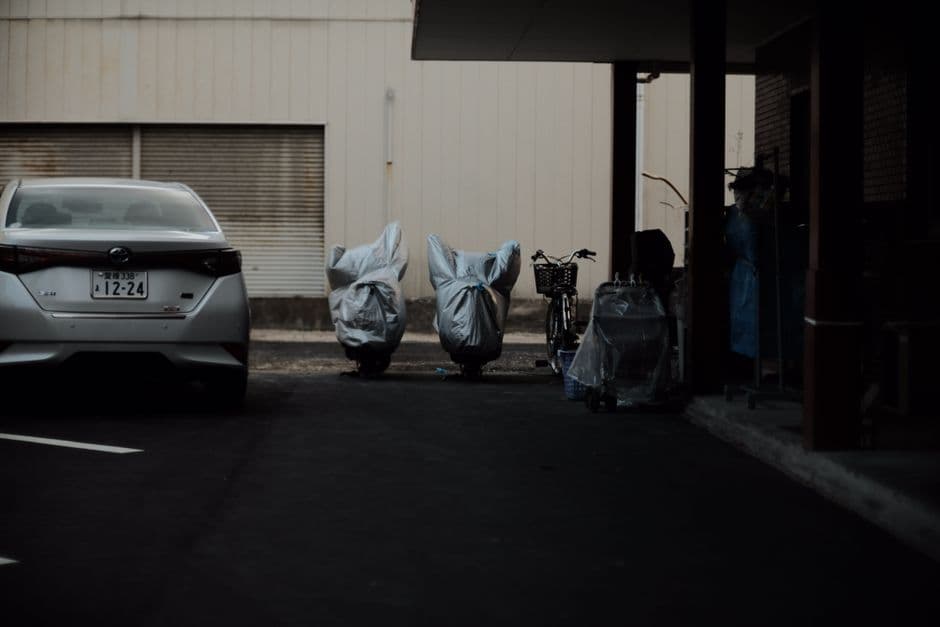
Fuel: stabilize it, or drain it completely
Ethanol-blended pump gas starts absorbing moisture and breaking down within weeks of sitting still, and a tank left half empty just gives it more air to react with. The fix is one of two moves: fill the tank close to full to limit that air pocket, add fuel stabilizer at the bottle's ratio, then run the engine five to ten minutes so treated fuel reaches the carburetor or injectors, not just the tank. The more thorough alternative is draining the tank and carburetor bowls dry and storing the bike bone dry until spring.
Skip the stabilizer step and you're the rider fighting a gummed-up carburetor jet or a clogged injector in April, usually after a few failed attempts to get the engine to idle. A bottle of stabilizer runs a few dollars. A carburetor rebuild runs considerably more, plus a Saturday you weren't planning to spend on it.
Battery care: a tender beats hoping for the best
A motorcycle battery left connected and unused can go from fully charged to too flat to start in three or four weeks, because the clock, alarm, and ECU keep drawing current even with the key off. A smart battery tender solves this outright: connect it and leave it for the whole season, since these chargers switch to a low maintenance current once the battery is full instead of overcharging it. Battery Tender's own winter storage guidance recommends exactly that instead of disconnecting the battery and hoping it holds a charge on its own.
Prefer to pull the battery entirely? Store it indoors somewhere between 40 and 70 degrees Fahrenheit and check the voltage monthly, charging anytime it drops below 12.4 volts. The testing and charging basics are the same as a car battery, and the car battery guide covers resting voltage and charging in more depth if you want it.
Tires and a stand: the fix for flat spots
Flat-spotting is the tire problem unique to storage: a motorcycle parked on the same two contact patches for months develops a slight flat section where the rubber sits, and you feel it as a wobble or thump for the first few miles every spring. A stand that lifts both wheels off the ground, a rear stand at minimum, prevents this outright by taking the weight off the tire entirely. Without a stand, top off pressure to the number on the swingarm sticker (cold air contracts, so tires read low in an unheated garage) and roll the bike forward or back every couple of weeks to change the contact point.
Michelin's own storage guidance backs both approaches, with a stand as the more reliable fix. Either way, check tread and sidewalls for cracking before the first spring ride. Rubber that sat through a cold winter is more brittle than rubber that spent the season riding.
Fluids and rust prevention before the cover goes on
Oil left sitting for months picks up trace acids and condensation from combustion byproducts, so change the oil and filter before storage rather than after: the engine sits with clean oil coating internals instead of contaminated oil doing nothing useful for five months. Top off brake and clutch fluid while you're in there, since both are hygroscopic and slowly pull moisture from the air even inside a sealed reservoir.
Rust prevention is mostly wiping down exposed metal, chrome, fork tubes, and the chain, with a light coat of oil or a dedicated protectant, then covering the exhaust outlet with a rag or vent plug so humid air doesn't sit in the pipe and rust it from the inside out. A quick wash and wax before any of this matters too, since road salt and grime left on the bike all winter etch into paint and chrome given enough time.
Choosing a cover and controlling humidity
A breathable, snug-fitting cover beats a cheap tarp, because a tarp traps condensation against the paint the same way a plastic bag traps moisture on food. Look for a cover rated for indoor or garage storage rather than an all-weather riding cover, since the two solve different problems: one blocks rain at highway speed, the other manages humidity on a bike that isn't moving. Indoors, on a concrete floor, add a moisture barrier or mat underneath the tires, since concrete wicks cold and damp straight up into the rubber and the frame touching it.
A small dehumidifier is optional but effective if your winters run damp rather than dry. Where you can't control humidity, the cover and the oil coating from a few sections back are doing the actual rust prevention, so do not skip either one just because the other is in place.
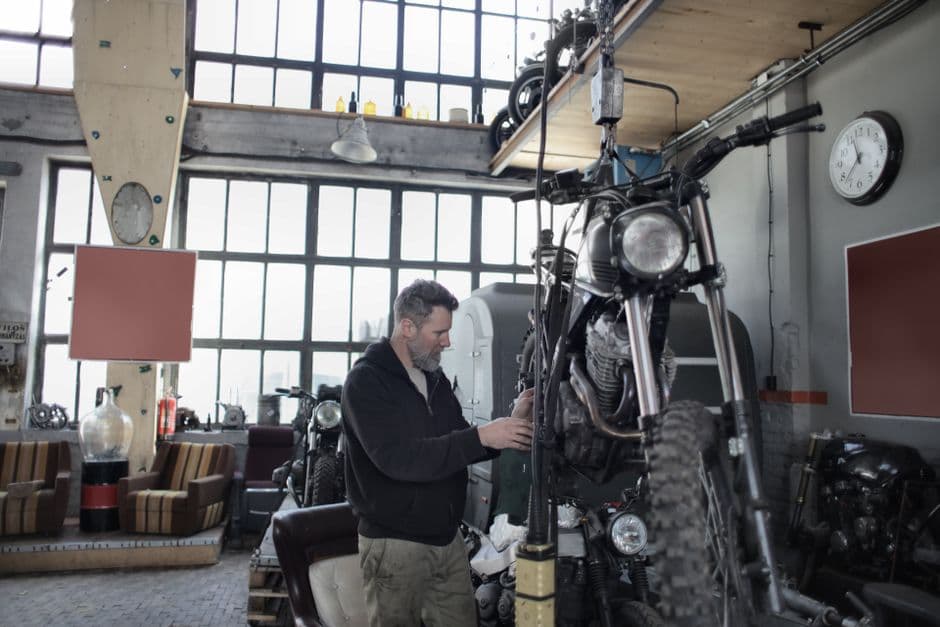
The spring startup checklist
Reactivating a motorcycle after winter storage is mostly the pre-storage checklist run in reverse: check tire pressure and look for flat-spotting or cracking, reconnect or reinstall the battery and confirm it holds a charge under load, and inspect the chain and fluid levels before the first start. If you drained the fuel system, refill with fresh gas; if you stabilized it, the fuel is already good to go.
Start the engine and let it idle for a minute or two before riding, listening for anything that sounds different from how you remember it: a rattle, a whine, a rough idle. Keep the first ride short and close to home, brakes included, before committing to a longer trip. A bike that sat all winter needs one easy ride to relearn what “normal” feels like, same as you do.
Log the prep, or repeat the guesswork next fall
The easiest way to make next fall's motorcycle winter storage faster is writing down what you did this time: the stabilizer brand and ratio, the tender model, the tire pressure you set, and the date. Six months is long enough to forget which stabilizer bottle you already opened or whether this year's battery is the same one from two winters ago.
It's the same record-keeping habit that makes the rest of motorcycle maintenance easier too, not just the fall-to-spring routine. Wheelscribe's entry form tracks dated jobs with mileage, cost, and parts for any vehicle with an odometer, storage prep included, and the free plan covers one vehicle with unlimited entries. If you're only now setting up a system for the bike, that's a good place to start before the next off-season sneaks up on you.
Frequently asked questions
How long can a motorcycle sit before winter storage prep matters?
About two to three weeks is when a healthy battery can already be too flat to start, and fuel begins absorbing moisture within a few weeks on the shelf. If the bike will sit longer than a month, treat it as a full motorcycle winter storage job rather than skipping steps.
Do I need to drain the fuel tank for motorcycle winter storage, or is stabilizer enough?
Stabilizer added to a nearly full tank is enough for most riders and far less work than draining. Fill up, add stabilizer at the bottle's ratio, and run the engine a few minutes so treated fuel reaches the carburetor or injectors. Draining is more thorough but only worth the extra effort if the bike sits longer than a single winter.
Should I disconnect my motorcycle battery for winter or use a tender?
A smart tender left connected for the whole season beats disconnecting, since it keeps the battery topped off instead of letting it slowly self-discharge. If you'd rather remove the battery entirely, store it indoors and check the voltage monthly, charging anytime it drops below 12.4 volts.
How do I stop my motorcycle tires from getting flat spots in storage?
A stand that lifts both wheels off the ground prevents flat-spotting completely, since the tire never bears weight on one spot for months. Without a stand, keep the tires at the pressure on the swingarm sticker and roll the bike a few inches every couple of weeks to change the contact point.
What temperature is too cold for motorcycle winter storage?
The bike itself tolerates cold fine as long as it's dry and the battery is maintained. The battery is the exception: lithium batteries shouldn't be charged below freezing, and lead-acid batteries lose capacity faster in unheated spaces, which is exactly why a tender matters more in a cold garage than a heated one.
What should I check before the first ride after motorcycle winter storage?
Tire pressure and condition, chain lubrication and slack, fluid levels, and whether the battery holds a charge under load, in that order. Start the engine and let it idle before riding, and keep the first trip short in case anything needs a second look.
Start logging your car's history
One car, unlimited entries, free forever. See pricing for what Pro adds.
Create free account