
Scooter and Moped Maintenance Guide
Scooter maintenance and moped maintenance intervals for oil, CVT belts, tires, brakes, batteries, and off-season storage, all in one guide.
What routine scooter maintenance actually covers
Scooter maintenance splits into two very different jobs depending on what is under the seat. A gas scooter has an engine, a CVT (continuously variable transmission) with a drive belt and rollers, and a small cooling system to keep an eye on. A moped, in the traditional sense, is smaller still and often chain-driven, closer in spirit to a bicycle with an engine bolted on. An electric scooter or moped skips the oil and belt questions entirely and replaces them with battery health.
The good news is that none of this is complicated once you know which category your machine falls into. Compared to a car or even a full-size motorcycle, a scooter has fewer systems to track and shorter, cheaper service intervals. The bad news is that those intervals come around fast, since a commuter scooter often racks up mileage in short, stop-and-go trips that are harder on an engine than steady highway miles.
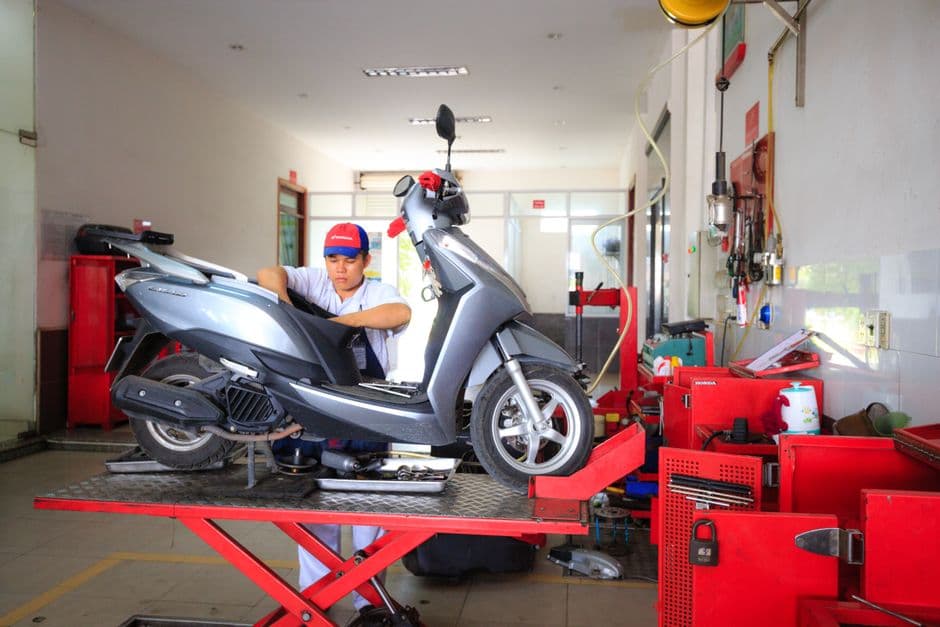
Oil changes and CVT service on a gas scooter
A 4-stroke scooter engine wants an oil change roughly every 600 to 1,000 miles, which is short compared to a car because these are small engines turning at high RPM for most of a ride. A 2-stroke engine skips the oil change but still needs its premix ratio and injector oil level checked, since running lean on oil is the fastest way to seize a piston.
The CVT is the part most owners forget entirely. The drive belt and variator rollers wear down gradually and rob acceleration long before they fail outright, so a check around every 5,000 to 8,000 miles is a reasonable default, though your owner's manual is the real source of truth here since intervals vary by model. A worn belt slipping under load feels like a loss of power, not a warning light, which is exactly why it gets ignored until it snaps.
Tires, brakes, and the checks that matter on two wheels
Small-diameter scooter tires lose pressure faster than car tires and are far less forgiving when they're low, since a soft tire changes handling on two wheels in a way it never does on four. A monthly pressure check with a real gauge, not a guess, is worth the thirty seconds it takes.
Brake pads on a scooter wear fast too, especially in stop-and-go city riding, so check pad thickness at every oil change rather than waiting for a squeal. The Motorcycle Safety Foundation's T-CLOCS pre-ride inspection was written for motorcycles but applies just as well to a scooter walk-around: tires, controls, lights, oil, chassis, and stands, in that order, before every ride that isn't a five-minute errand.
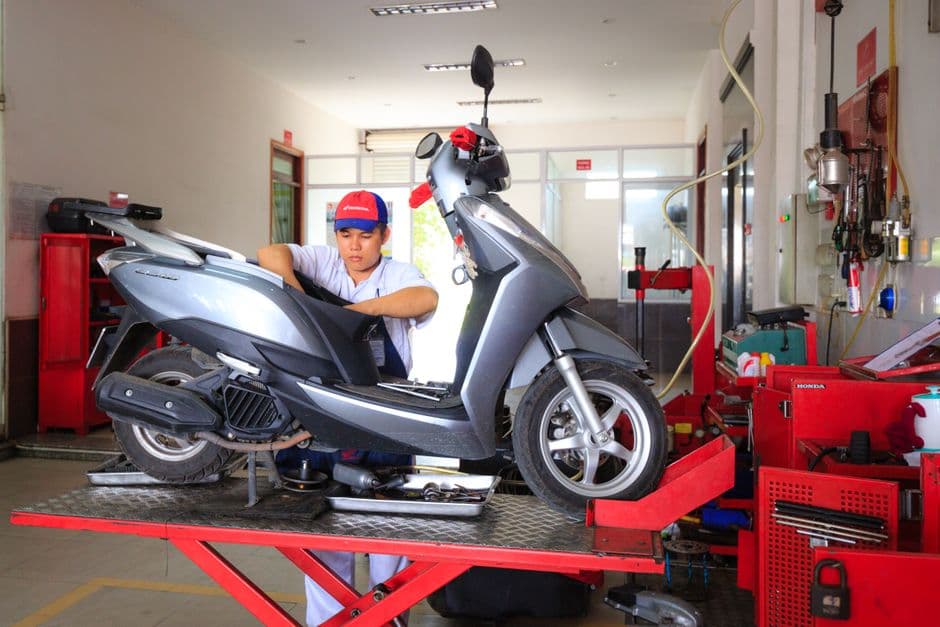
Battery, spark plug, and cold-start problems
A scooter that cranks slowly or refuses to start on a cold morning is usually a battery problem before it's anything else, since small sealed batteries lose capacity faster than a car battery once they start to age. A cheap voltmeter check at rest, and again while cranking, tells you in under a minute whether the battery is the culprit.
A fouled spark plug is the other usual suspect, especially on a bike that sits for weeks between rides or does mostly short trips that never fully warm the engine. Pull it, check the color and gap, and replace it on a schedule (commonly every 3,000 to 6,000 miles) rather than waiting for a no-start to force the issue.
Off-season storage for scooters and mopeds
A scooter parked for more than a month needs a little prep or it will fight you when you pull it back out. Stabilize the fuel, disconnect the battery or put it on a tender, and get the tires off the ground on a stand if you have one, since flat-spotting is a real risk on small, narrow tires carrying the bike's full weight in one spot.
For anyone parking a bigger bike alongside the scooter over winter, our motorcycle winter storage guide covers the same fuel, battery, and tire prep in more depth, and nearly all of it transfers directly to a scooter or moped.
Keeping a maintenance record for a scooter
Scooters change hands often, get borrowed by roommates, and rack up small services that are easy to lose track of without a paper trail. A dated log of oil changes, belt checks, and tire replacements is exactly what a buyer wants to see if you ever sell, and it's what keeps you from guessing whether that CVT belt is 2,000 miles old or 8,000.
If you're already logging a motorcycle, our motorcycle maintenance guide covers the same record-keeping habits. Wheelscribe's entry form works the same way for a scooter as it does for a car or bike, and it's free to start with one vehicle.
Frequently asked questions
How often does a scooter need an oil change?
A 4-stroke gas scooter typically needs an oil change every 600 to 1,000 miles, shorter than a car because small engines run at higher RPM. 2-stroke scooters skip the oil change but still need their premix ratio checked regularly.
How often should I check or replace a scooter's CVT belt?
A reasonable default is every 5,000 to 8,000 miles, though intervals vary by model, so check your owner's manual. A worn belt usually shows up as a gradual loss of acceleration rather than a warning light.
What's the difference between scooter maintenance and moped maintenance?
A gas scooter has an engine and CVT with a belt and rollers to service. A traditional moped is often chain-driven and simpler, closer to a bicycle with an engine. Electric versions of either skip fuel and oil questions entirely in favor of battery health.
Why won't my scooter start on a cold morning?
A weak battery is the most common cause, since small sealed batteries lose capacity faster than a car battery as they age. A fouled spark plug, especially on a bike that sits between short trips, is the other usual suspect.
How do I store a scooter or moped for the winter?
Stabilize the fuel, disconnect the battery or use a tender, and get the tires off the ground if possible to avoid flat-spotting. The same prep used for motorcycle winter storage applies almost exactly to scooters and mopeds.
How often should scooter brake pads be checked?
Check pad thickness at every oil change rather than waiting for a squeal, since stop-and-go city riding wears scooter brakes faster than highway riding wears a car's.
Start logging your car's history
One car, unlimited entries, free forever. See pricing for what Pro adds.
Create free account