
Synthetic Oil Change vs Conventional
A synthetic oil change costs more and lasts longer, but not on every car. Here is what separates the two oils and how to pick an interval you can trust.
Synthetic oil change vs conventional: the short answer
A synthetic oil change usually costs two to three times what a conventional oil change costs, and it lasts roughly twice as long, so the price per mile lands in much the same place. What you actually buy with synthetic is stability: it stays thin enough to pump on a freezing morning and thick enough to protect when the engine is working hard in August traffic.
For most drivers the decision has already been made for them. If your owner's manual calls for a full synthetic, and nearly every car built in the last decade does, then conventional oil is not the cheaper option. It is the wrong option. The interesting question is only which oil to run in an older engine that predates the requirement, and that one has a real answer further down.
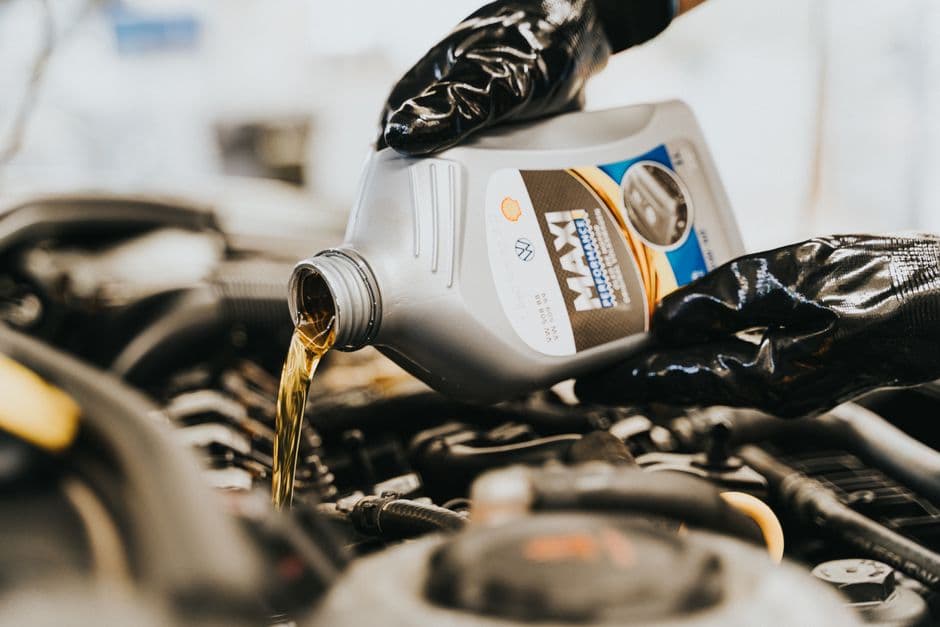
What synthetic oil actually is
Conventional oil is refined crude with additives blended in. Full synthetic starts from base stocks that are engineered rather than distilled, so the molecules come out a uniform size instead of a mixed bag. That uniformity is the whole trick. Even molecules resist shearing, sludging, and boiling off in a way that a mixed batch never will.
Synthetic blend sits between the two and is mostly a price point rather than a category. It carries some of the benefit and some of the discount, which is a reasonable compromise for an older engine that leaks a little and does not care much either way. Turbocharged engines are the clearest case for going full synthetic, because the turbo bearing runs hot enough to cook conventional oil into varnish, and that varnish is what kills turbos.
How long each oil really lasts
Conventional oil generally wants changing every 3,000 to 5,000 miles. Full synthetic commonly runs 7,500 to 10,000, and some manufacturers specify 15,000 with an oil life monitor watching the engine's actual workload. The 3,000 mile rule everyone repeats came from an era of conventional oil and dirtier engines, and it has quietly outlived its usefulness.
Two things shorten any interval regardless of the oil. Short trips are the first, because an engine that never fully warms up leaves fuel and water in the sump. Towing, mountains, and heavy idling are the second. Both are what a severe service schedule is for, and the Department of Energy's maintenance guidance makes the same point from the fuel economy side. When your driving fits that description, use the shorter of the two numbers in your manual and stop negotiating with yourself about it.
Reading the bottle: viscosity and specifications
The grade on the front, 0W-20 or 5W-30 for example, is not marketing. The number before the W describes flow when cold, the number after describes flow at operating temperature, and modern engines use oil pressure to run variable valve timing. Put a heavier grade in an engine that wants 0W-20 and you are not being generous, you are slowing down a control system.
The small print on the back matters just as much. Look for the API service symbol, the donut that names the current standard, and for whatever manufacturer approval your car requires, such as dexos, VW 504 00, or MB 229.5. The American Petroleum Institute's licensing program explains what those marks certify. A cheap jug missing the right approval is not a bargain, it is an unlicensed guess.

Will synthetic hurt a high-mileage engine?
No. This myth refuses to die, and it comes from early synthetics in the 1970s that did shrink some seal materials. Modern formulas do not. What actually happens is that synthetic cleans deposits an old engine had been relying on to plug a seep, so a leak that was already there becomes visible. The oil did not cause it, it just stopped hiding it.
If your engine has 150,000 miles and a habit of losing half a quart between changes, a high-mileage synthetic is worth trying, since the seal conditioners in it swell the rubber slightly. Switching back and forth between oil types is fine too. Nothing bad happens, whatever the person at the counter tells you. Our step-by-step oil change walkthrough covers the job itself if you are doing it in the driveway.
What the two options cost over a year
Do the arithmetic per mile rather than per visit and the gap mostly closes. A driver covering 12,000 miles a year needs roughly three conventional changes or one to two synthetic ones. The synthetic invoice is bigger each time and lands less often, and you spend fewer Saturdays under the car, which has a value your spreadsheet will not show you.
Where synthetic clearly wins is on the engines that demand it: turbos, direct injection, tight tolerance modern fours, and anything that tows. Where it barely matters is a lightly used older engine on a 5,000 mile schedule. For how the oil bill fits the rest of the year, see our breakdown of what car maintenance costs and how often the other jobs come due in our maintenance schedule guide.
Write down which oil went in
The single most useful line in an oil change record is the one nobody writes: the exact product and filter. “Oil change, 62,400 miles” tells you when. “5W-30 full synthetic, dexos approved, filter PL14610, 62,400 miles” tells you what to buy next time and whether the interval you chose was sensible.
It also settles arguments later. If a shop tells you the last change used conventional oil on a car that requires synthetic, a dated record with the product name on it is the difference between a warranty claim and a shrug. Wheelscribe keeps that per car with the receipt attached, so the next decision is arithmetic rather than memory.
Frequently asked questions
Is a synthetic oil change worth the extra cost?
Usually yes, because the longer interval offsets most of the higher price per change. It is not optional at all if your manual specifies full synthetic, which covers most cars built in the last decade and nearly every turbocharged engine.
How often should I get a synthetic oil change?
Most full synthetic oils run 7,500 to 10,000 miles, and some manufacturers specify up to 15,000 with an oil life monitor. Shorten that if you mostly drive short trips, tow, or sit in heavy traffic, since those conditions age oil faster than mileage suggests.
Can I switch from conventional oil to synthetic?
Yes, at any point, and you can switch back. No flush or special procedure is needed. Synthetic may reveal a seal that was already seeping by cleaning away the deposits plugging it, but it does not cause the leak.
Does synthetic oil damage older engines?
No. That reputation comes from synthetic formulations sold in the 1970s. Modern synthetics are safe in older engines, and high-mileage versions add seal conditioners that help slightly weepy engines rather than hurting them.
What happens if I use the wrong oil viscosity?
Thicker oil than specified slows oil pressure driven systems like variable valve timing and hurts cold starts. Thinner than specified can leave too little film at high temperature. Use the grade printed in the manual or on the oil cap.
Is synthetic blend oil good enough?
It is a middle price point rather than a distinct performance class. A blend is reasonable in an older naturally aspirated engine on a moderate interval, but if your car requires full synthetic, a blend does not meet the specification.
Start logging your car's history
One car, unlimited entries, free forever. See pricing for what Pro adds.
Create free account