
Car Engine Maintenance That Actually Matters
Car engine maintenance comes down to oil, coolant, filters, plugs, and belts. Here are the intervals that keep an engine running past 200,000 miles.
What car engine maintenance actually covers
Car engine maintenance is five things: oil and filter, coolant, air and fuel filtration, spark plugs and ignition parts, and the belts or chain that keep the top and bottom of the engine in time with each other. Everything else under the hood is either a wear part with its own clock or a repair waiting for a symptom.
Engines rarely die of old age. They die of a fluid that was never changed, a cooling system that was ignored, or a timing belt that was 30,000 miles past due. Modern engines will run past 200,000 miles on nothing more exotic than the intervals in the owner's manual, done roughly on time, which is a lower bar than most people assume.
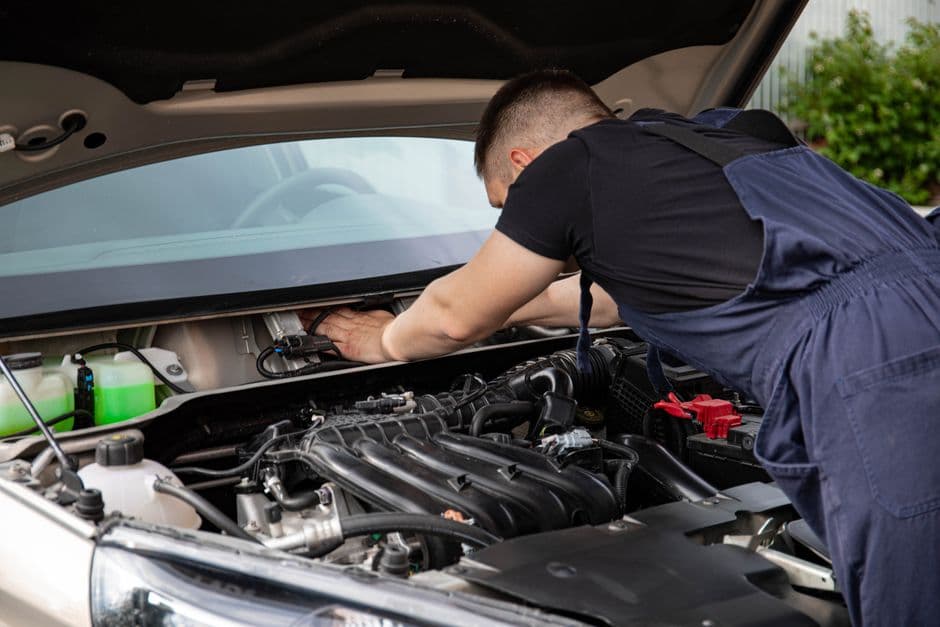
Oil is most of the job
Change the oil and filter on the interval in your manual, using the viscosity and specification it names. Modern engines run tight tolerances and variable valve timing systems that use oil pressure as a control signal, so the wrong grade is not a small deviation. If your car specifies 0W-20, that is an engineering requirement rather than a suggestion.
Watch the level between changes, especially on engines known to consume a little. Half a quart low is fine, two quarts low on a turbo four is how bearings die. Short trips are the quiet killer here: an engine that never reaches full operating temperature leaves fuel and water in the oil, which is exactly why every severe service schedule shortens the interval for stop-and-go driving. Our step-by-step oil change guide covers doing it yourself.
Coolant, the fluid everyone forgets
Long-life coolant typically runs 5 years or 100,000 miles for the first fill and shorter after that. It is easy to ignore because it almost never gets checked, and it fails quietly: the corrosion inhibitors deplete long before the colour changes, and then the water pump, radiator, and heater core start corroding from the inside.
Do not mix coolant types. Orange, pink, blue, and green are shorthand for different chemistries, and combining them can gel into something that blocks passages. Check the level cold at the overflow tank, look for crusty white residue around hose clamps as an early leak sign, and replace the pressure cap when the system is opened, since a weak cap lowers the boiling point of the whole system. Our cooling and AC maintenance guide goes deeper on that side.
Filters, plugs, and the ignition side
Engine air filters usually want replacing every 15,000 to 30,000 miles, sooner on dusty roads. It is a two-minute job on most cars and one of the few where holding the old filter up to a light tells you everything. Fuel filters vary enormously: some are lifetime items in the tank, others are serviceable and on the schedule.
Spark plugs are the interval people misjudge. Old copper plugs wanted changing around 30,000 miles, while iridium and platinum plugs commonly run 60,000 to 100,000. Stretch them well past due and the coil packs work harder to fire a widening gap, which turns a cheap plug job into an expensive ignition repair. A misfire under load, rough idle, or falling fuel economy usually points here first.
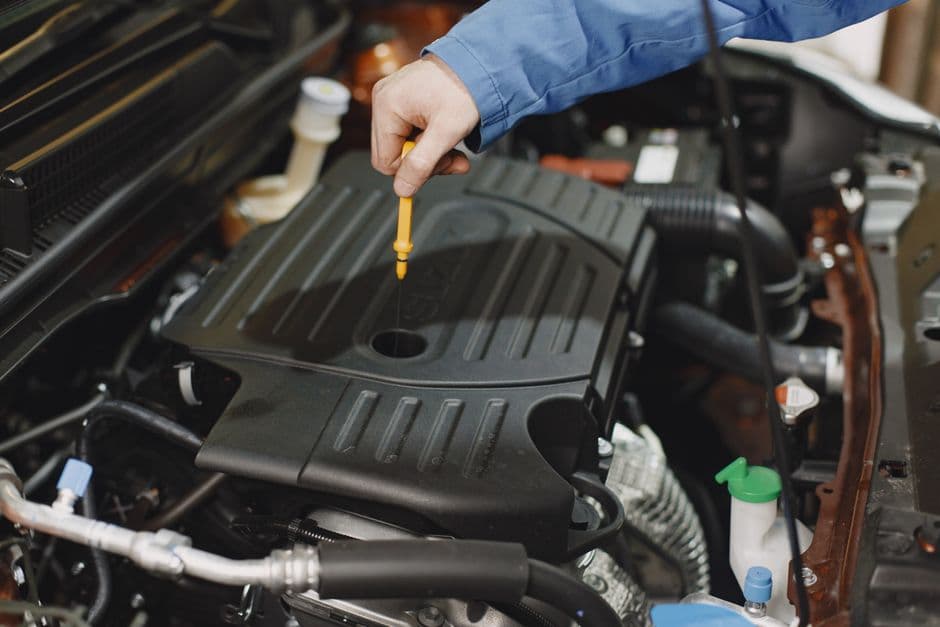
Belts and chains, the one that strands you
Find out whether your engine uses a timing belt or a timing chain, because the answer changes your whole maintenance budget. Belts are replacement items, commonly somewhere between 60,000 and 105,000 miles, and on an interference engine a snapped belt bends valves and ends the engine. Chains are designed to last the life of the engine, but they depend on clean oil and healthy tensioners to do it.
When a belt is done, replace the water pump, tensioner, and idler pulleys at the same time. The parts are cheap next to the labour of getting in there twice. The serpentine belt on the outside of the engine is a separate item, usually good for 60,000 to 100,000 miles, and it announces itself with cracks across the ribs or a squeal on cold start.
Transmission fluid and the lifetime myth
Plenty of manufacturers call their automatic transmission fluid a lifetime fill. In practice that means the design life of the transmission, not of the car, and transmission shops see the results. If the fluid is accessible and the car is going to be kept, changing it somewhere in the 60,000 to 100,000 mile range is cheap next to a rebuild.
The caveat: on a high-mileage transmission that has never been serviced, a full flush occasionally precedes a failure that was already coming. A drain and fill is the conservative move there. Idling and short trips are hard on both the engine and the fluids around it, a point the Department of Energy's driving guidance makes from the fuel side. It is also worth checking open recalls for your VIN, since engine and fuel system recalls are common and the work is free.
Intervals only work if you know where you are
Every number above is useless without a starting point. “Plugs every 90,000 miles” means nothing if nobody knows whether the last set went in at 60,000 or 110,000, and that is the situation most used cars arrive in. The fix is unglamorous: write down the date, the mileage, the part number, and what it cost, every single time.
For how the intervals stack up across a whole year, see how often a car needs servicing. Wheelscribe keeps that history per vehicle with receipts and photos attached, so the next timing belt decision is arithmetic rather than a guess.
Frequently asked questions
What is included in engine maintenance?
Oil and filter changes, coolant service, engine air and fuel filters, spark plugs and ignition components, and the timing belt or chain plus the serpentine belt. Those five areas cover nearly everything an engine asks for on a schedule.
How often should spark plugs be replaced?
Copper plugs usually run about 30,000 miles, while iridium and platinum plugs commonly last 60,000 to 100,000. Check your manual for the exact figure, because running plugs well past due makes the ignition coils work harder and fail early.
Does my car have a timing belt or a timing chain?
Your owner's manual or a quick search on your exact engine code will tell you. Belts appear on the maintenance schedule with a replacement interval, usually 60,000 to 105,000 miles. Chains have no listed interval because they are designed to last the life of the engine.
Is lifetime transmission fluid really lifetime?
It means the design life of the transmission rather than the life of the car. If you plan to keep the vehicle long term and the fluid is serviceable, changing it between 60,000 and 100,000 miles is far cheaper than a rebuild.
Do short trips damage a car engine?
They accelerate wear. An engine that never reaches full operating temperature leaves fuel and moisture in the oil, which is why severe service schedules shorten oil intervals for short-trip and stop-and-go driving even though the mileage is low.
Start logging your car's history
One car, unlimited entries, free forever. See pricing for what Pro adds.
Create free account