
Wiper Blade and Washer System Maintenance
Wiper blade maintenance and windshield washer system care: replacement intervals, streaking fixes, fluid type, and clogged nozzle repairs.
Wiper blade maintenance and washer system basics
Wiper blade maintenance means replacing the rubber edge before it streaks, chatters, or leaves gaps in your wipe pattern, and windshield washer system maintenance means keeping the reservoir full of the right fluid with nozzles clear enough to actually reach the glass. They're two halves of the same job. A fresh blade dragging across dry, dirty glass still won't give you a clean sweep, and clean fluid sprayed by a worn blade just gets smeared right back.
Most drivers only think about either system once visibility is already bad, mid-storm, with a windshield full of streaks and nowhere to pull over. Federal windshield wiping and washing system standards exist specifically to prevent that situation. Treating both as routine maintenance instead of an emergency fix means checking the blades and topping off fluid a couple of times a year, not waiting for the first heavy rain of the season to find out they've failed.
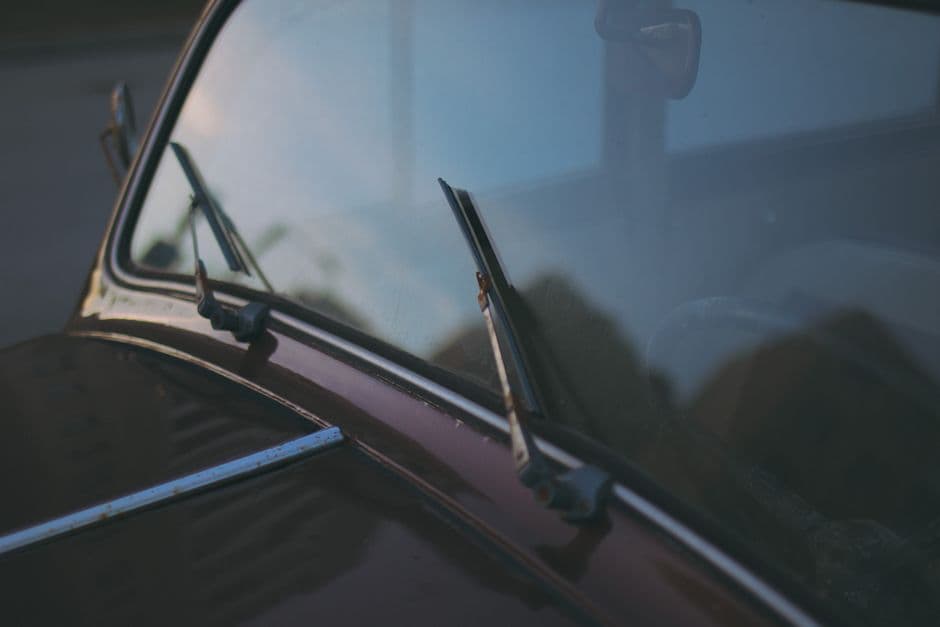
How often to replace wiper blades
Most wiper blades need replacing every six to twelve months, regardless of how many miles you've driven, because it's UV exposure and temperature swings that break down the rubber edge, not mileage. That tracks with how windshield wiper design actually works: the blade is a wear item independent of the motor driving it, which is why a wiper motor can easily outlast a dozen sets of blades.
A blade parked outside in full sun or through a hard winter wears faster than one garaged year-round, even on an identical car. Rather than guessing, watch the wipe itself: streaking, skipping, or squeaking is the rubber telling you it's done, no matter what the calendar says. Our car maintenance checklist lists wiper blades alongside the other routine checks worth doing on a fixed schedule instead of waiting for something to fail first.
Signs your wiper blades need replacing
Streaking, chatter, and skipped spots on the glass are the clearest signs a wiper blade is worn out. Streaking leaves thin trails of water or grime the blade can't fully clear, usually from a rubber edge that's hardened or split. Chatter is the juddering, skipping motion you can feel and hear as the blade bounces across the glass instead of gliding, often caused by a warped blade or an arm that's lost its spring tension.
A squeal on dry glass for a second at the start of a pass is normal, but a constant squeak through the whole wipe usually means the rubber has glazed over and stopped gripping evenly. None of these signs mean the wiper motor or arm is broken. In nearly every case it's a cheap blade, not a repair. Our beginner maintenance guide covers which small jobs like this are worth doing yourself before paying a shop.
Washer fluid: type and reservoir care
Washer fluid should always be a purpose-made windshield washer fluid, never plain water, because water freezes at 32°F and can crack the reservoir or the fluid lines in cold weather. Washer fluid is rated to a specific freeze point, commonly negative 20°F to negative 40°F for winter blends, and it carries solvents plain water doesn't have for cutting through bug residue and road film.
Check the reservoir level whenever you check oil or coolant. It's easy to forget, since low fluid doesn't trigger a dashboard warning on most cars until it's already empty. Watch the color and clarity too: fluid that's gone cloudy or has visible debris floating in it can clog the nozzles it's supposed to keep clear, so it's worth flushing the reservoir if you're not sure how old the fluid sitting in it actually is.

Clogged washer nozzles: diagnosis and fixes
A washer nozzle that sprays weakly, sprays crooked, or doesn't spray at all is almost always clogged rather than broken. Dried fluid residue, road grime, and even wax from a recent detail job can plug the tiny nozzle opening, especially on cars that sit unused for weeks at a time.
Clear it with a sewing needle or a fine pin worked gently into the opening, then run the washer pump to flush out the loosened debris. If the spray pattern is aimed wrong instead of blocked, most nozzles can be adjusted by turning the aim with that same needle, just skip anything sharp enough to gouge the plastic. If the pump runs but nothing comes out at any nozzle, the problem is more likely a cracked line or a dead pump than a clog, and worth a proper diagnosis instead of more prodding.
Winter wiper blades and cold-weather care
Winter wiper blades use a rubber boot that covers the whole metal frame, which keeps ice and snow from packing into the joints and stops the blade from freezing to the glass overnight. A standard blade left on through winter can crack under the extra flex from ice buildup, and it's the exposed metal frame that usually freezes solid to the windshield first.
Lift the wipers off the glass before a hard freeze or heavy snow forecast so they don't bond to the windshield overnight, and never run them across a windshield covered in ice. That's the fastest way to tear the rubber or burn out the wiper motor straining against the resistance. Our winter car maintenance checklist covers the rest of the cold-weather prep worth doing alongside a blade swap.
Logging wiper and washer maintenance
Wiper blades and washer fluid are cheap, frequent enough jobs that they're easy to lose track of, exactly the kind of maintenance that's worth logging even though no single instance costs much on its own. A record of when you last swapped blades tells you whether a new streak means a six-month-old blade is finally wearing out, or a two-month-old one is already failing, which points to a different problem entirely.
Wheelscribe's entry form logs the date, mileage, and cost for a job like this in under a minute, and it's free to start with one car if you'd rather visibility maintenance stop being something you only think about mid-storm.
Frequently asked questions
How often should I replace my wiper blades?
Most wiper blades last six to twelve months regardless of mileage, since UV exposure and temperature swings break down the rubber faster than driving does. Watch for streaking, chatter, or skipped spots as the real signal instead of relying on the calendar alone.
Why do my new wiper blades still streak?
New blades can streak if the glass still has old wax, road film, or silicone residue on it from a recent detail. Clean the windshield with a dedicated glass cleaner and a fresh microfiber towel before blaming the blade itself.
Can I use plain water instead of washer fluid?
No. Washer fluid is formulated with a specific freeze point and solvents that cut through bug residue and road grime, while plain water freezes at 32°F and can crack the reservoir or fluid lines in cold weather. Always refill with proper washer fluid.
Why isn't fluid spraying from my washer nozzles?
A weak or missing spray is almost always a clogged nozzle, which you can often clear with a fine needle. If the pump runs but nothing comes out at any nozzle, check for a cracked line or empty reservoir before assuming the pump has failed.
Do I really need winter wiper blades?
They help a lot in snowy or icy climates. The rubber boot over the frame keeps ice from packing into the joints and stops the blade from freezing to the glass, which a standard blade is more prone to in sustained cold weather.
Is it safe to run my wipers over an icy windshield?
No. Scraping ice with the wiper blades instead of an ice scraper can tear the rubber, bend the arm, or burn out the wiper motor as it strains against the resistance. Clear ice manually first, then run the wipers on a clean, thawed windshield.
Start logging your car's history
One car, unlimited entries, free forever. See pricing for what Pro adds.
Create free account